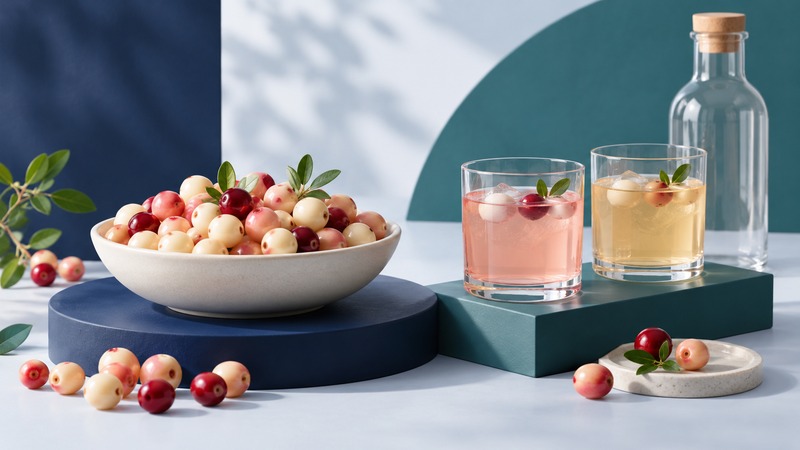
Choose a white cranberry drink by the full product name, ingredients and Nutrition Facts panel. Its pale color cannot tell you the juice percentage, added sugar or which other fruit juices are included. The drink you buy is a formulation, not simply a glass of pressed pale berries.
Separate the harvest story from the bottle
White cranberry harvesting has historically occurred before the main red-fruit harvest. A USDA New England crop report from September 2001 records growers beginning a white-berry harvest while preparing for the regular harvest. That is useful dated evidence for an early-harvest product, rather than a universal calendar for every grower or proof that each vine produces two separate crops.
For the finished beverage, the current U.S. Ocean Spray White Cranberry 64 fl oz product page describes a blend of white grape and cranberry juices and identifies it as a juice drink. Its front-of-page vitamin C statement is a nutrient claim, not a claim that the bottle is 100% cranberry juice. Product information was checked in October 2026; use the bottle in your store as the final reference.
Read four parts of the label
Focus the table and use the arrow keys to scroll sideways.
| Label element | Question it answers | What to record |
|---|---|---|
| Full product name | Which formulation am I buying? | White cranberry, a flavored blend, regular or a reduced-sugar version |
| Percent juice statement | How much of the beverage is juice? | The percentage and any explanatory wording |
| Ingredients | Which juices and sweeteners are present? | Juice sources, added sweeteners and other ingredients |
| Nutrition Facts | What is in the stated portion? | Serving volume, calories, total sugars and added sugars |
The FDA explanation of sugars says total sugars include naturally present and added sugars. The added-sugars line is part of that total. Do not add the two lines together. A drink sweetened with fruit juice and a drink sweetened with sugar can have similar total sugar while their added-sugar declarations differ.
Compare the same volume across bottles. A large front-panel vitamin claim, pale color or absence of high-fructose corn syrup does not supply the missing serving-size calculation.
Calculate the glass you actually pour
Fictional label example: a drink lists 24 g total sugars, including 18 g added sugars, per 240 mL. A 180 mL glass is 0.75 of that serving. It contains approximately 18 g total sugars, including 13.5 g added sugars. These invented numbers demonstrate the method; they are not the Ocean Spray label.
Formula: label quantity × poured volume ÷ label volume. Use milliliters throughout, or the same fluid-ounce unit throughout.
For a lighter-tasting 240 mL drink, mix 120 mL of your chosen juice drink with 120 mL plain sparkling water. This is an optional serving idea. With the fictional label above, that glass contains about 12 g total sugars, including 9 g added sugars. The dilution halves the drink’s contribution per final glass; it does not remove sugar from the juice portion. Sweetened mixers require their own calculation.
Choose a use and keep the label
For a mixed drink, test a small glass before filling a pitcher: white grape content and added sweeteners affect flavor as much as the cranberry name. Note your ratio so the next batch is repeatable. For cooking, follow a recipe that specifies a juice drink or pure juice; switching between them can change sweetness and acidity.
Follow the exact package’s refrigeration and after-opening instructions, retain the date or lot information and use clean serving utensils. Keep fresh and frozen cranberry cooking separate from beverage comparisons: whole fruit supplies a different texture and ingredient role.
The sugar-substitute guide explains why sweetener forms differ, while the snack-label guide shows the same portion calculation applied to grams of food.