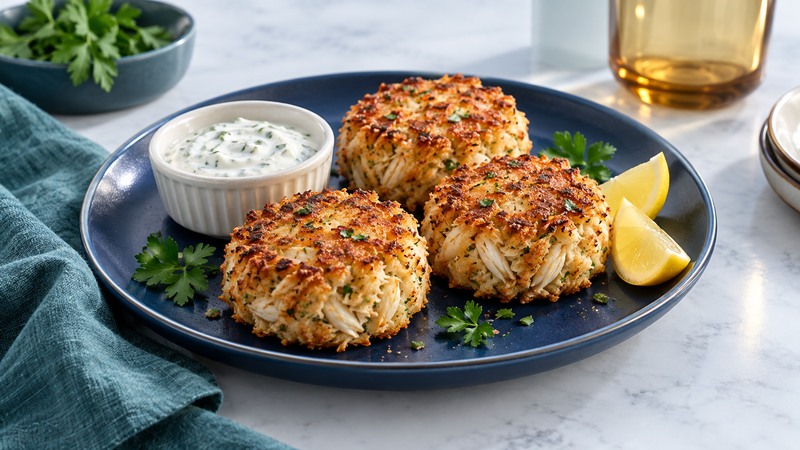
Crab cakes hold together when the crab is well drained, the binder is mixed before the delicate meat goes in, and the shaped mixture has time to chill. This baked version makes six cakes and uses cooked, picked crabmeat, so there is no live-crab preparation to complete first.
Choose the crabmeat product
Scroll the table sideways. With a keyboard, focus the table and use the arrow keys.
| Grade | Typical pieces | Use in this recipe |
|---|---|---|
| Jumbo lump | The largest white pieces | Fold especially gently; large intact pieces cost more and are easy to break. |
| Lump or backfin | Large white pieces and chunks | A useful choice when visible pieces matter. |
| Special, flake or regular | Smaller white pieces | Works for a more uniform cake. |
| Claw | Darker meat with a stronger flavor | A flavor preference; expect a darker interior. |
These descriptions follow North Carolina Sea Grant’s crabmeat buying guide. Check the label for species, cooked status, net weight and refrigeration instructions. Pasteurized refrigerated crabmeat still needs refrigeration; “canned” alone does not mean shelf-stable. Buy from a source that keeps the product properly chilled and follow its use-by and opened-use directions.
Six baked crab cakes
Allow: about 15 minutes to mix, at least 30 minutes to chill and 15–20 minutes to bake. Have a bowl, rubber spatula, rimmed metal baking sheet, measuring tools and a food thermometer. US cup and spoon measures apply.
Ingredients: 1 lb (454 g) cooked lump crabmeat, drained; 1 large egg; ¼ cup (60 g) mayonnaise; 1 tablespoon chopped parsley; 2 teaspoons Dijon mustard; 2 teaspoons Worcestershire sauce; 1 teaspoon seafood seasoning; 1 teaspoon lemon juice; ⅔ cup panko breadcrumbs; and oil for the tray. Lemon wedges are optional for serving.
Proportions and baking approach are adapted from University of Maryland Extension’s crab-cake recipe (PDF). This version omits its optional extra salt and butter. Gently spread the crab on a clean plate and remove any shell fragments without shredding the meat.
- Whisk egg, mayonnaise, parsley, mustard, Worcestershire, seasoning and lemon together. Gently fold in crab and panko just until distributed. Cover and refrigerate at least 30 minutes.
- Heat the oven to 450°F (about 230°C). Lightly oil a rimmed metal tray rated for that temperature. Divide the chilled mixture into six equal mounds, about 100–110 g each depending on the crumbs and drainage. Gently compact so loose edges hold.
- Bake about 15–20 minutes, checking from 15 minutes for light browning and a hot center. For this cooked-seafood mixture, use 165°F in the center as the finish check. Continue baking if needed.
The clock is an estimate. FDA specifies 160°F for egg dishes; the 165°F target here also covers reheating the already-cooked seafood, consistent with FDA’s egg guidance and USDA’s reheating guidance. Check more than one cake with a clean thin-tip thermometer. Yenra has not kitchen-tested this adaptation.
Protect the crab and the structure
Drain liquid before measuring the crab; extra moisture makes a loose mixture. Whisking the binder separately spreads seasoning without crushing the lumps. Chilling lets the crumbs absorb moisture and helps handling. If the mixture still spreads instead of mounding, fold in one additional tablespoon of panko, refrigerate for another ten minutes and reassess. Record that adjustment for the brand of crab and crumbs used.
Divide by the actual mixture weight for equal cakes: weigh the finished mixture and divide by six. Equal size makes the cooking checks more informative. Use a wide spatula to move the baked cakes after a brief rest. Serve with lemon, a salad and a spoon of lemon-pepper yogurt dip.
Plan refrigeration and allergens
Keep crabmeat and the mixed cakes at 40°F or below; assemble close to cooking and, for this plan, bake within 24 hours of mixing or sooner if the crab label requires it. FDA’s seafood handling guidance covers chilled storage, thawing and time limits. Wash hands and surfaces after handling the raw egg mixture.
Refrigerate promptly in shallow covered containers within two hours, or one hour when the surroundings exceed 90°F. Keep at 40°F or below and use within 3–4 days, or freeze. Reheat cooked leftovers to 165°F. USDA’s leftover guidance explains cooling and reheating.
Crab is a crustacean shellfish allergen. The binder commonly adds egg, wheat and mustard; Worcestershire may contain fish, and mayonnaise or seasoning formulas vary. Read every label and disclose the actual ingredients to guests. Imitation crab changes both the ingredients and the texture, so it is not the assumed product in this formula. FDA’s allergen guide explains the US major-allergen labels.