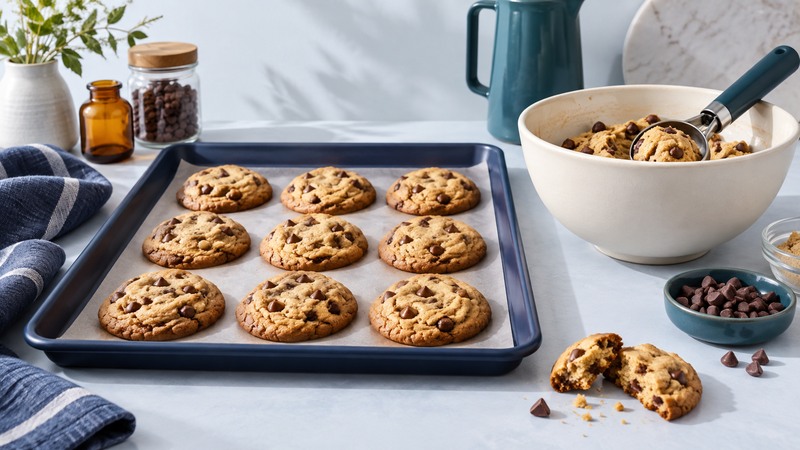
For repeatable cookies, weigh the flour, use evenly sized dough portions and start each batch on a cool tray. Then judge the edges and center together. The method below makes about 30–32 small chocolate-chip cookies; larger scoops require a different baking window.
Set up one measured batch
Use a scale, mixing bowls, measuring spoons, a mixer or sturdy spoon, a light-colored metal baking sheet, oven-rated parchment and a cooling rack. The oven setting is for a conventional oven.
- 143 g all-purpose flour
- ½ teaspoon baking soda and ½ teaspoon fine table salt
- 113 g unsalted butter, softened but still holding its shape
- 75 g granulated sugar and 80 g packed brown sugar
- 1 large egg, about 50 g without shell
- ½ teaspoon vanilla extract
- 170 g semisweet chocolate chips
This is a half-batch adaptation of Nestlé Toll House’s original chocolate-chip formula, using its extra-flour option when omitting nuts, plus specified weights and a chilling step. It has not been kitchen-tested by Yenra.
Mix, chill, portion and bake
- Mix flour, soda and salt. Beat butter and sugars until creamy, then mix in egg and vanilla. Stir in the flour mixture just until combined, then the chips.
- Cover and refrigerate about 30 minutes, until the dough is firm enough to scoop. Preheat the oven fully to 375°F (about 190°C).
- Portion about 20 g dough per cookie. Space portions about 2 inches apart on a cool parchment-lined tray.
- Bake on the middle rack, checking at 9 minutes. Continue until edges are golden and centers have set, usually around 9–12 minutes; chilled dough and oven differences can extend this.
- Rest on the tray 2 minutes, then transfer to a rack. Let the tray cool before loading again.
Chilling and cool trays help control spread; King Arthur’s baking team explains these factors. Keep the remaining dough refrigerated between batches. Butter that looks oily or partly melted will behave differently from softened butter.
The ingredient total is roughly 640 g, so 32 portions of 20 g is a useful estimate. Bowl residue, egg size and measuring differences change the exact count. Weigh the completed dough if the number matters: 620 g, for example, gives 31 portions of 20 g.
Read a cooled cookie before changing the dough
Freshly baked cookies are fragile and keep firming as they cool. Let one cool enough to handle, then break it and compare the center with the edges. A glossy chocolate chip is melted chocolate; the surrounding dough should be set. If the center is wet dough while the edge is already dark, check scoop size, oven temperature and pan color before simply adding more flour.
Scroll the table sideways. With a keyboard, focus the table and use the arrow keys.
| Result | Check first | Next adjustment |
|---|---|---|
| Cookies spread into each other | Warm dough, hot tray or cramped spacing. | Chill the remaining dough and use a cool, properly spaced tray. |
| Very thick or dry | Flour weight and actual portion size. | Weigh flour; avoid packing additional flour into the dough while scooping. |
| Dark bottoms, pale tops | Dark pan or low rack position. | Use a light metal sheet and the middle rack. |
| One side browns faster | Oven hot spots. | Rotate the tray partway through the next batch after the cookies begin setting. |
| Crisper than intended | Time in the oven and size of portions. | Check a little earlier while still allowing the center to set. |
Pan lining also changes results. In King Arthur’s controlled pan-lining comparison, the same dough spread differently on foil, parchment and silicone. Keep the lining consistent while diagnosing a recipe. An observation from one dough is a useful clue, not a universal ranking for every cookie.
Handle dough carefully and keep batches identifiable
Flour and eggs can carry harmful bacteria. Eat the dough only after baking; wash hands, tools and surfaces after raw-dough contact. Removing the egg alone does not make ordinary flour safe to eat raw. FDA’s flour guidance explains the risk.
For a simple household workflow, bake this dough the day you mix it, or freeze the remaining scooped portions promptly on a lined tray. Transfer firm portions to a freezer container labeled with recipe, date, portion weight and the 375°F setting. Bake from frozen, allowing extra time and checking the same doneness cues; test a small tray first.
Cool baked cookies completely before closing them in an airtight container. Keep crisp and soft varieties separately so they retain their intended texture. Freeze the surplus if you will not enjoy it soon. For an adjusted batch, record flour weight, chill time, scoop size, pan and baking time so the next change is deliberate.