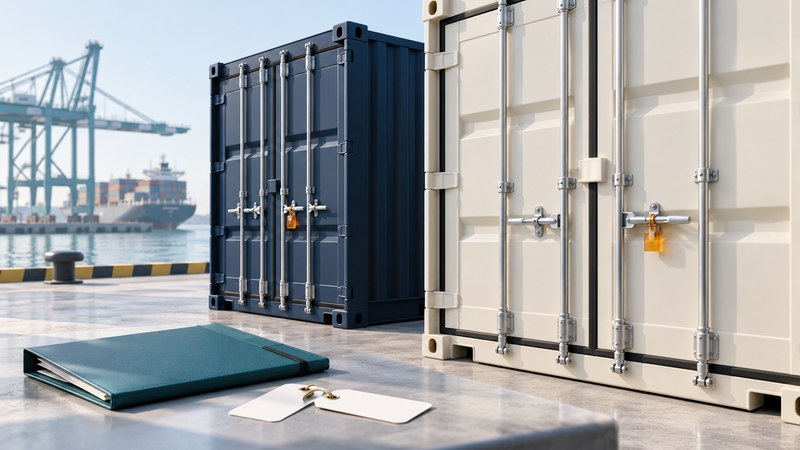
Shipping-container security depends on the physical container, authorized access and records that connect its journey. A logistics coordinator's useful starting point is a custody map: who handles the container, what they check, what they record and whom they contact when the facts disagree.
Separate business controls from customs programs
US Customs and Border Protection's Container Security Initiative (CSI) focuses on identifying and prescreening high-risk US-bound containers at participating foreign ports. Customs authorities use risk information and inspection technologies. An individual shipper's role is to provide accurate information and follow applicable instructions.
CTPAT is a voluntary partnership in which eligible businesses assess supply-chain risk and meet relevant program criteria. CBP publishes minimum security criteria by business type. An importer, carrier and other entity can have different responsibilities. Membership can bring benefits, but inspection decisions remain with authorities.
Use your organization's procedures, contractual responsibilities and applicable current criteria for the shipment. The planning record below helps organize observations; it does not establish CTPAT compliance, customs release or permission to open a container.
Build a handoff map
| Stage | Record or confirm | Who resolves a discrepancy? |
|---|---|---|
| Preparation and loading | Container identifier, authorized inspection/loading record and responsible parties | Assigned loading or site supervisor |
| Closure and release | Applicable seal details, time, location and authorization to release | The organization controlling the release |
| Transport handoff | Container and seal identifiers, condition observations, sender and receiver | The designated carrier or shipment contact |
| Official inspection | Available inspection reference and any documented seal change | Authorized customs, carrier or broker contact |
| Receipt | Arrival details, comparison with expected records and unresolved exceptions | Receiving supervisor and designated shipment coordinator |
Use exact identifiers, including prefixes and leading zeros. Record a date, time and time zone so people in different locations can reconstruct the sequence. Keep references to supporting documents in an approved repository instead of scattering screenshots across personal messages. Restrict records containing routes, cargo details or security information to authorized recipients.
Read a seal as one piece of evidence
A seal number helps connect a physical closure with its record. At an authorized handoff, compare the observed identifier and condition with the expected information using the company's procedure. Ask the responsible specialist which seal standard, sourcing controls and handling requirements apply to the shipment; a photograph or an advertised “high security” label cannot establish conformity on its own.
A matching number supports continuity of the recorded closure. It leaves other questions open, including what was loaded, what happened before closure and whether the container itself has an unexplained condition. Conversely, a changed number requires reconciliation: an authorized inspection may have changed the seal. Preserve both identifiers and the documented reason instead of overwriting the earlier entry.
Fictional handoff example: a changed seal
The dispatch record for container EXAMPLE-01 lists seal A0017. The receiving record shows B0042. The receiver records the difference and follows the company's hold-and-escalation procedure. The coordinator obtains an authorized inspection reference linking the old and replacement seals, checks it through the established contact and records who cleared the exception.
If the reference cannot be verified, the discrepancy stays open. Neither an unexplained replacement number nor an informal message saying “customs changed it” completes the record. These identifiers are illustrative, not valid shipment documents.
Use a defined discrepancy procedure
- Record what you actually observed. Distinguish a number mismatch, missing document, visible damage and an unverified report.
- Follow the authorized hold procedure. Preserve the current state and avoid an unapproved release or opening.
- Notify the designated contact. Supply shipment references and observations through the approved channel.
- Reconcile with evidence. Have the responsible party verify inspection, replacement, correction or other explanation.
- Close deliberately. Record the decision, authorizing person, time and supporting reference; leave unresolved issues clearly marked.
If there is an immediate danger or suspicious hazardous condition, keep clear and use the site's emergency procedure and appropriate authorities. Do not open or disturb suspicious cargo to investigate it yourself. Routine paperwork discrepancies and emergencies need different response routes.
Review the process between shipments
Ask whether every handoff has an owner, whether partners use consistent identifier fields and whether after-hours contacts work. Review repeat exceptions for a correctable cause, such as a missing time zone, a transcription habit or an undocumented inspection handoff. Retain the original record and an attributable correction so the history remains understandable.
Download the container custody and exception record (editable text). Adapt it to your approved procedures and applicable program criteria.
For site equipment around a loading area, use the separate perimeter-sensor planning guide. Container custody, site detection and customs inspection each have their own responsible parties.