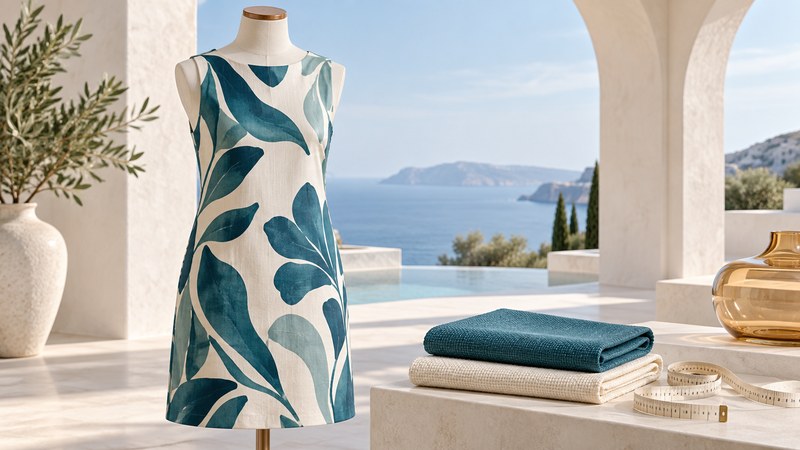
A Lilly Pulitzer purchase works best when you like both the print and the garment underneath it. Start with the occasion, then check the silhouette, fiber content, lining, measurements and care label. Those details determine how the piece will fit into your wardrobe after the first impression of color.
Understand the print and the garment
The brand’s own history connects its early shift dresses with Lilly Pulitzer’s Palm Beach juice stand and describes a long partnership with Key West Hand Print Fabrics. The straight, relatively simple shift provided a large surface for expressive prints. The brand also reissues archival artwork, so an old print design can appear on a newly made garment.
Keep three descriptions separate: the style identifies the garment, the print or colorway identifies its surface design, and the fabric specification describes its material. A familiar print name alone cannot establish a garment’s age, composition or care requirements.
View front, back and detail photographs. Notice how a large motif falls across seams, pockets and the neckline. If buying a specific secondhand piece, ask for photographs of that item, including its label and any alterations; a stock photo shows a styling idea rather than its present condition.
Read the material details before choosing a size
| Detail | Look for | Why it changes the choice |
|---|---|---|
| Fabric | Fiber percentages and knit or woven construction | Two similar prints can have different stretch, drape and care needs. |
| Lining and closure | Lining material, zipper and adjustable features | These affect coverage, dressing and the space available for movement. |
| Length and shape | Stated length and the size used for that measurement | A model photograph alone cannot establish where the hem will fall on you. |
| Care | The complete label, including drying and trim instructions | A piece needs a care routine you can actually maintain. |
For a concrete material example, the brand’s Little Lilly Classic Shift, style 021131, is listed as lined stretch poplin with 98% cotton and 2% spandex. Its published care options include a separate cold delicate wash or dry cleaning. This is a children’s style and a product-specific example checked September 30, 2026; use the instructions supplied with your own garment, including its drying directions.
Use measurements, then check movement
Use the appropriate women’s, children’s or other chart in the official size guide. The brand describes measuring the fullest bust and hips and the natural waist. Record the units and compare all relevant measurements; a letter size borrowed from another brand provides less information.
Body measurements and finished garment measurements answer different questions. When a seller supplies a flat width, establish where it was measured and whether the fabric was stretched. Compare that measurement with a similar garment you already wear comfortably, measured in the same way.
During a permitted try-on, sit, walk, reach and check the closure. Look for pulling at the hips or bust, gaping at the armholes and a hem that rises more than you want. A larger size may add room while changing the shoulders; a different cut can be the better solution. Read the item’s return conditions before ordering, especially during a sale.
Make a choice you can use repeatedly
Before paying, save the style number, composition and care information. Plan at least two actual occasions or outfits around the piece. For secondhand clothing, check seams, lining, zipper operation, discoloration and any changed hem before judging value from a print’s popularity.
After purchase, photograph the care label and follow it through washing, drying and storage. The brand’s FAQ explains searching by style number and provides a route for fit questions when a listing leaves something unresolved.