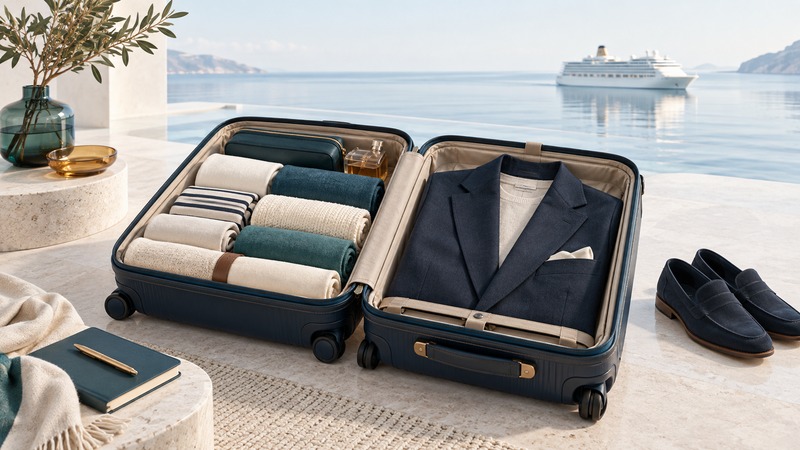
A useful cruise wardrobe covers four situations: travel to the ship, time on deck, shore activities and evenings aboard. Start with the actual voyage and planned venues, then build a compact set of clothes that can do more than one job.
Write a voyage brief
Record the dates, sea days, ports, excursions and any pre- or post-cruise stay. Check weather near departure, including temperatures at the time of day you will be outside. A port's daytime forecast gives little help for a windy deck or an early excursion.
Read the operator's current dress guidance and the booking's daily calendar. Cunard distinguishes smart attire from Gala Evenings and publishes themes in My Cunard. Check your sailing for the actual schedule and the venues you intend to use. Other operators have their own rules; familiar words such as formal or casual can carry different expectations.
Confirm laundry availability, allowed items, turnaround and pricing for your ship. Treat a planned wash as dependable only after checking those details and allowing time for clean clothes to return. Self-service facilities and services vary.
Build outfits around repeatable pieces
| Situation | Plan around | Check before packing |
|---|---|---|
| Travel and embarkation | Comfortable outfit and a readily accessible change | Clothes needed before checked luggage reaches the cabin |
| Deck and sea days | Layers that can be added or removed | Wind, sun and indoor temperature changes |
| Shore activity | Clothes and footwear suited to the excursion | Operator instructions and local venue requirements |
| Evening | Complete outfits for the venues you will use | Exact dress guidance and scheduled themed evenings |
Lay out tops with every bottom they are meant to accompany. Add the shoes, underlayers and outer layer. An outfit that depends on one missing belt or unsuitable shoe is incomplete even if the suitcase contains plenty of clothing.
Choose a small compatible color range if that makes combinations easier. Repeat a jacket, cardigan or evening accessory when it remains clean and comfortable. Separate what you want to wear from what an activity requires; a walking excursion and a seated dinner ask different things of footwear.
Example: seven nights with a planned wash
Try packing the resulting set before buying additional luggage. Weigh the bag and compare its dimensions and weight with the rules for every travel leg. Put essential first-day clothing where it can be reached easily. Leave room for laundry so clean outfits stay easy to find.
Adjust for the route and finish the check
For a warm itinerary, prioritize useful shade and coverage, breathable garments you enjoy wearing, and a way to manage wet swimwear. For cooler routes, combine an insulating layer with weather protection appropriate to planned outings. Ask the excursion operator about activity-specific equipment instead of assuming ordinary walking shoes will cover every activity.
Cunard's packing page also identifies items such as irons as prohibited. Check the ship's current prohibited-items list before adding an iron or steamer. Choose garments whose permitted care is practical aboard, and use approved services or facilities.
A week before leaving, check changes to the itinerary and evening calendar. Remove duplicate items that have no distinct job, but keep a realistic spare for the garments you rely on most. The sun-hat guide and walking-shoe fit checklist help with two decisions that are difficult to fix after departure.
Keep a working copy
Cruise clothing planner (plain text). Save a copy in a text editor and fill in the fields. The file includes instructions, assumptions and a link back to this guide.