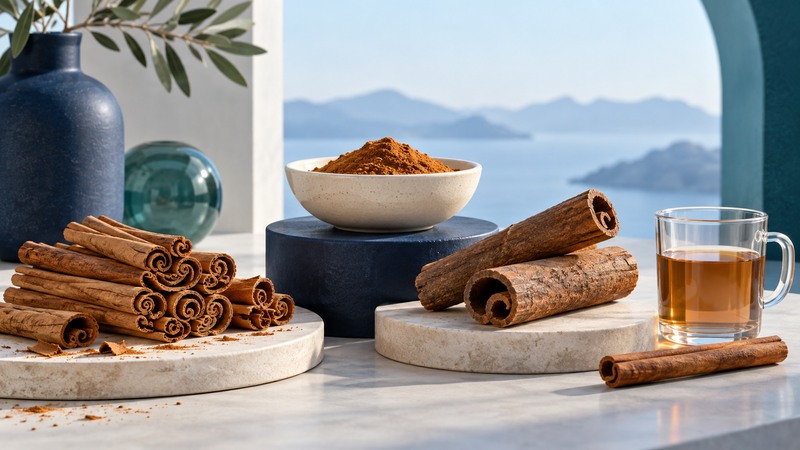
Choose cinnamon for the flavor you want and the way the recipe uses it. Ground cinnamon distributes through dough and batter; a stick can infuse a liquid and then be removed. Varieties differ in aroma and intensity, so the best jar is the one that suits your dish and your taste.
Compare varieties without a quality ranking
On a narrow screen, scroll the table sideways. Keyboard users can focus it and use the arrow keys.
| Label | Typical flavor direction | A practical place to try it |
|---|---|---|
| Ceylon | Delicate, fragrant and comparatively mild | A custard or fruit dish where subtle aroma has room. |
| Korintje / Indonesian cassia | Familiar, rounded cinnamon warmth | Cookies, breakfast baking and everyday spice mixtures. |
| Saigon / Vietnamese cassia | Often bold and spicy | A cinnamon-focused filling or bake. |
| Chinese cassia | Assertive, warming character | Sweet or savory dishes written for cassia. |
These are broad sensory descriptions, not guaranteed strengths for every jar. King Arthur Baking’s comparison of cinnamon types is useful for understanding the labels. Harvest, processing, age and storage also affect what reaches the bowl.
Look for a named variety when you want to repeat a result. “Premium” and an oil-content claim are weaker guides to your preference than a small comparison in the same food. For powdered cinnamon, rely on traceable labeling rather than trying to identify the species by color.
Choose whole bark or ground spice
Use ground cinnamon where you want the spice distributed throughout: whisk it into dry ingredients, or mix it into sugar before a recipe’s filling step. This helps avoid concentrated dry pockets.
For a removable infusion, add a stick to the recipe’s warm milk, syrup or poaching liquid. Follow the recipe’s timing, taste when it is safe to do so, and remove the bark before serving. Broken bark fragments need straining. Stirring ground cinnamon into a drink gives suspended particles; it will not dissolve like sugar.
Sticks vary in size, thickness and density. A “one stick equals one teaspoon” rule hides those differences. If replacing a stick with powder, use a recipe that offers that substitution or accept a different texture and adjust gradually. A fine powder cannot be removed from an infusion as easily as intact bark.
Run a small flavor comparison
Label the jars and write down the date of the test. If one sample is much weaker, check whether it is an old jar before attributing the difference entirely to the variety. For a topping that adds texture as well as spice, see turbinado sugar.
Keep culinary use and supplement decisions distinct
NCCIH’s cinnamon review says research does not clearly support cinnamon for a health condition. Amounts commonly used as a food spice are different from large or prolonged supplemental use. Cassia can contain coumarin; extended use can be a concern for sensitive people, including those with liver disease. Ceylon generally contains much less.
Anyone considering a cinnamon supplement should review the exact product and medicines with a clinician or pharmacist. Continue prescribed treatment for diabetes or other conditions. Do not swallow dry cinnamon powder as a challenge; inhalation and other serious injury can result.
Keep a useful small supply
Store cinnamon tightly closed in a cool, dry place away from sunlight. Whole spices usually hold quality longer than ground ones, according to Penn State Extension’s pantry advice. Check aroma periodically and replace a jar that has lost the flavor you need.
Buy a quantity you can use while it is aromatic. Grinding an entire supply at once sacrifices the storage advantage of keeping bark whole. For another baking aroma with different handling, see vanilla beans, extract and paste.
Explore all seasoning and ingredient guides · Food, cooking and meal planning