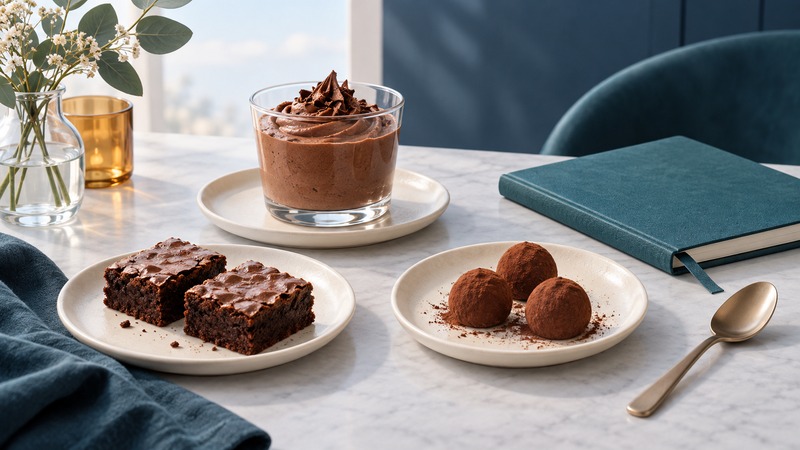
A useful dessert plan starts with the time and space available: oven time, cooling time, refrigerator room and attention at the moment of serving. Pick one main chocolate dessert, then add a simple contrast such as fresh fruit if it helps the meal.
Match the dessert to the occasion
Separate hands-on work from waiting. A dessert that takes only a few minutes to mix may need hours to chill. A tray of brownies occupies the oven briefly but needs time to cool before clean slicing. Read the complete recipe before deciding when to begin.
Scroll sideways. With a keyboard, focus the table and use the arrow keys.
| Situation | Useful format | Plan for |
|---|---|---|
| Oven available earlier | Brownies or a simple chocolate cake | Cooling time and a suitable pan. |
| No oven; refrigerator space available | Chocolate mousse | Mixing, the specified chilling stage and individual serving cups. |
| Small pieces to share | Ganache truffles | Time for the center to firm before shaping; chilled storage. |
| Fresh fruit and same-day service | Berry clusters or drizzles | Drying the fruit, setting the coating and keeping portions cold. |
For a complete baked option, King Arthur’s Quick and Easy Brownies specifies a 9-by-13-inch pan, a 350°F oven and a 25–30-minute baking window. Its method calls for cooling before cutting. Use the full recipe’s quantities and doneness check; a smaller pan changes the depth and baking behavior.
Work backward from serving
- Write the serving time and guest count. Check ingredient restrictions with the guests before choosing a format.
- Reserve the limiting equipment. A mixer, oven shelf or clear refrigerator tray may also be needed for the main meal.
- Add every waiting stage. Record cooling, chilling, setting and any thawing specified by the recipe, then add a margin for your first attempt.
- Place finishing tasks last. Cut, garnish or add delicate fruit close enough to service that the intended texture survives.
Build contrast without adding another project
A dense brownie pairs naturally with juicy fruit; a smooth mousse already supplies richness and can use a small crisp garnish. Taste the main dessert before adding sweet sauces. Choosing one contrast keeps the plate coherent and reduces last-minute assembly.
For a more ambitious baking project, Chocolate Desserts by Pierre Hermé, written with Dorie Greenspan, offers a route into composed desserts. Greenspan discusses her chocolate macaron work for the book. Approach a multi-component recipe by listing its bases and resting stages first; make a trial batch before relying on it for a large occasion.
Finish with a realistic service plan
For mousse, cream fillings and fresh-fruit desserts, allocate refrigerator space before starting. Keep the chosen recipe’s storage instructions with the finished dish. FDA’s storage guidance calls for prompt refrigeration and a refrigerator at 40°F (4°C) or below. Bring out small portions of perishable desserts as needed.
Use the dessert planning sheet to record your recipe link, guest count, equipment, waiting stages and serving arrangements. It includes the fictional brownie example so the calculation is easy to adapt.