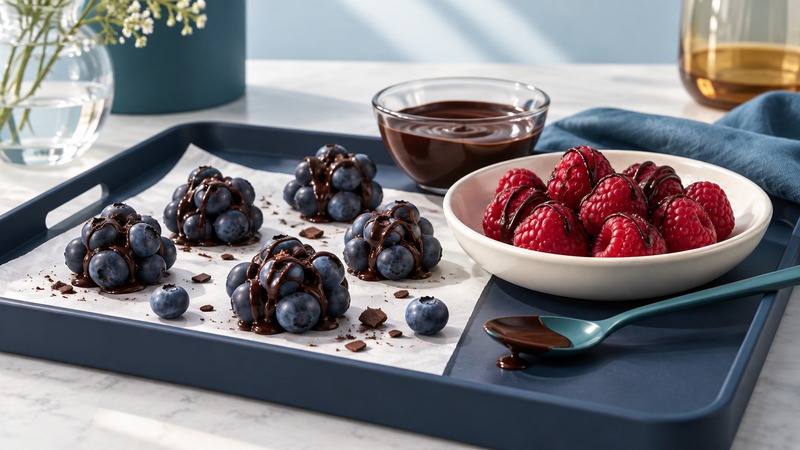
Match the chocolate format to the fruit. Blueberries work in small clusters, delicate raspberries are easier to serve in a dish with a light drizzle, and larger strawberries suit individual dipping. Dry fruit and small portions make assembly easier.
Give each berry a suitable structure
A blueberry cluster rests on its own little chocolate base. A raspberry has a hollow center and delicate segments, so repeated dipping and lifting can crush it. For a mixed platter, prepare separate groups instead of stirring every fruit through one bowl of chocolate.
Start with sound fruit and remove damaged or moldy berries. FDA recommends running water for washing produce, followed by drying with a clean towel. Keep the chocolate bowl and utensils dry; prepare fruit separately.
Make about 12 blueberry clusters
Use 227 g (8 oz) dark chocolate and 85 g (3 oz) fresh blueberries. This takes half the chocolate and blueberry quantities from Driscoll’s blueberry bark, omits its nut toppings and changes the shape to individual clusters. Yenra has not kitchen-tested this adaptation. The original bark recipe is another option when you prefer pieces cut from one sheet.
- Line a tray with parchment and make room for it in the refrigerator. Rinse and thoroughly dry the berries before beginning.
- Chop the chocolate and melt it in a dry microwave-safe bowl at half power, stirring between short bursts. Stop when stirring removes the final small pieces.
- Divide roughly half the chocolate into 12 small puddles on the parchment. Divide the blueberries among them, keeping the berries in a low, compact group.
- Spoon the remaining chocolate over the fruit so it joins the base. Avoid a tall stack that falls apart when lifted.
- Refrigerate about one hour, then check that a cluster lifts cleanly and holds together. Keep covered and refrigerated until service.
For six clusters, halve both ingredients again: approximately 113 g chocolate and 43 g berries. Keep the same setting check; a smaller batch does not automatically halve the chilling time.
Use a light finish for raspberries
Arrange rinsed, dried raspberries in a shallow dish and spoon over a little melted chocolate in thin lines. Treat this as a serving format, adjusting the amount to the dish rather than coating every berry. Let the chocolate cool from hot to fluid and just warm before drizzling. Use a spoon to serve so the fruit keeps its shape.
For a sharing platter, place clusters on parchment squares beside a separate raspberry dish. Keep nuts or other toppings in clearly identified separate dishes if using them, and check ingredient and allergen labels. Omitting added nuts does not establish that a chocolate product is free of nut cross-contact.
Plan around fresh fruit
Prepare a modest batch for the day you will serve it. The chocolate shell leaves the fruit perishable; it is a coating, not a preservation process. Driscoll’s specifies refrigerated storage for its fresh-blueberry bark. For perishable foods, FDA’s room-temperature limit is two hours, or one hour above 90°F (32°C).
If a cluster crumbles, use a little more of the measured chocolate to connect the berries on the next one. If chocolate pools heavily, make flatter bases. If the fruit releases juice, stop and choose sounder, drier berries for the next batch. See individual strawberry dipping or dessert planning for complementary options.