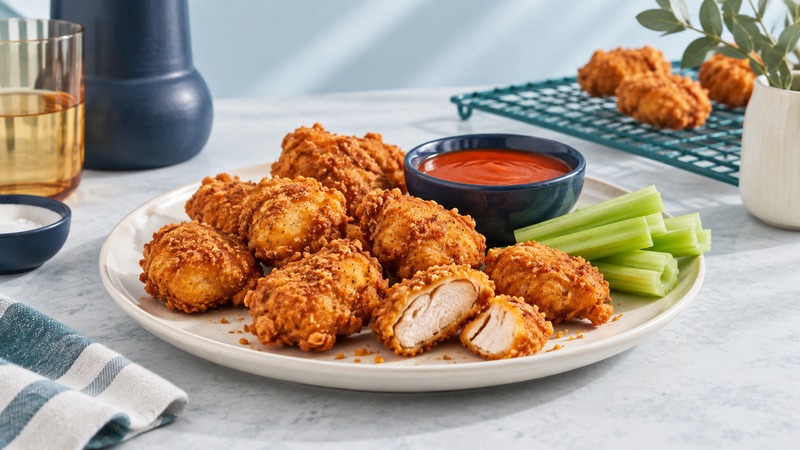
For this home version, boneless wings are bite-size pieces of chicken breast with a crunchy coating and a dipping sauce. A consistent cut matters more than an exact nugget count: similar thickness helps the pieces finish together.
Prepare one pound of chicken
Makes: approximately 25 pieces, or four modest portions with sides. Allow about 15 minutes to prepare and 20–30 minutes to cook. Have a rimmed metal baking sheet, two bowls or a clean food bag, tongs and a thin-tip food thermometer.
Ingredients: 1 lb (454 g) boneless skinless chicken breast, cut into roughly 1-inch pieces; ½ cup barbecue sauce; 3 cups plain cornflake-style cereal, measured before crushing; and a little cooking spray for the tray. Reserve additional sauce separately if desired.
The coating method comes from Oregon State University’s Food Hero chicken nuggets. Choose a sauce whose heat you enjoy; the coating carries its flavor. Read cereal and sauce labels for allergens. This is a home recipe, with no claim to reproduce a restaurant’s proprietary batter.
Coat, space and bake
- Heat the oven to 375°F (190°C). Lightly grease the baking sheet. Crush the measured cereal into small crumbs; leave some texture.
- Toss the chicken with the ½ cup sauce. Coat each piece with crumbs, pressing lightly so they adhere. Arrange in one layer with gaps between pieces.
- Bake about 20–25 minutes, checking from 20 minutes. Continue as needed until the coating is golden and the chicken passes the temperature checks below.
Work with clean hands and separate raw-chicken tools from the serving plate. Discard leftover coating and sauce that touched raw chicken. Yenra has not kitchen-tested this adaptation; the thermometer endpoint strengthens the source’s visual check.
Check the center of several pieces
FoodSafety.gov lists 165°F (74°C) for all poultry. Insert a thin probe from the side of a thick piece so its sensing area reaches the center. Check several of the largest pieces from different parts of the tray. If one is below 165°F, continue cooking and check again with a clean probe. Cut color alone is an unreliable endpoint.
Use a second tray or bake another batch when the pieces cannot sit apart. Packing more chicken into the same space changes how the coating dries and how quickly the centers cook. For a doubled batch, double the ingredients; retain the same piece size and check each tray independently.
Adjust crispness and sauce
Coating falls off: crush oversized flakes, let excess sauce drip off, and press the crumbs onto the chicken. Move pieces as little as possible before the coating sets.
Soft coating: inspect tray crowding and sauce quantity. For the next batch, leave wider gaps and serve sauce alongside. A cooked center can be ready before a thick, wet coating becomes crisp.
Too spicy or salty: change the sauce used for the next batch. Adding more sauce after baking increases both its flavor and moisture. Start with a spoonful over a small portion rather than tossing the entire tray.
For a mild plate, serve four to six pieces with cucumber or celery and lemon-herb yogurt dip. For a warm meal, add roasted sweet-potato cubes. Cook the sides on their own schedule; avoid lowering the chicken’s oven temperature mid-bake to accommodate them.
Refrigerate leftovers promptly in shallow containers within two hours after cooking or removal from hot holding, or one hour above 90°F. Keep at 40°F or below, use within 3–4 days and reheat to 165°F. Freeze portions you will keep longer. Follow USDA’s cooling and reheating guidance; time spent on the table counts toward the limit.