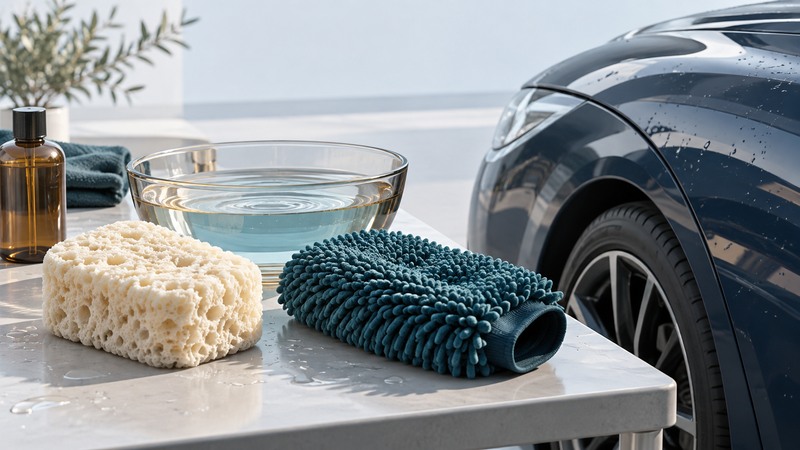
Choose a car-wash sponge or mitt by its intended use, the vehicle’s finish-care instructions and how thoroughly you can clean it. Product labels such as “natural,” “reusable” or “biodegradable” answer different questions. A useful choice combines suitable contact with the paint, manageable care and a credible end-of-life plan.
Start with the finish and the washing method
Identify whether the surface is ordinary gloss paint, matte paint, a wrap, paint protection film or another coating. Read the vehicle instructions and any installer’s care sheet before selecting a tool or shampoo. A combination wash-and-wax sponge may contain ingredients unsuitable for a finish that needs a different treatment.
As one vehicle-specific example, Tesla’s Model 3 cleaning instructions call for flushing away grime before hand washing with a clean soft cloth and suitable car shampoo, followed by rinsing. The manual also contains component-specific cautions. Use your own vehicle’s instructions for chemicals, cameras, trim and washing equipment; this example does not approve every sponge for every finish.
Read the wash-tool label for material, intended surfaces, cleaning instructions and replacement signs. A household scourer or abrasive cleaning pad is a different product from an automotive wash tool. If the manufacturer cannot identify the material or intended use, choose an option with clearer documentation.
Compare the tool you can inspect and maintain
On a narrow screen, scroll the table horizontally. Keyboard users can focus its region and use the arrow keys.
| Type | Inspect before purchase | Plan for care |
|---|---|---|
| Foam or cellulose sponge | Material, pores, edges and any embedded cleaner | Follow cleaning instructions; inspect retained particles |
| Microfiber mitt or pad | Contact surface, seams, cuff and material label | Use the specified laundering and drying method |
| Natural sponge | Documented source, automotive use and irregular hard inclusions | Rinse and inspect carefully; follow supplier instructions |
| Preloaded wash-and-wax tool | Ingredients, supported finishes and reuse instructions | Track cleaning performance and tool condition separately |
Softness in a shop is only one observation. Consider whether you can turn the tool to a clean surface, see contamination and rinse it thoroughly. Keep a separate, identified tool for heavily soiled areas such as wheels so you can control where it is used. No material name provides a scratch-free guarantee.
Choose a tool you can grip comfortably when wet. A small manageable area of contact can be easier to inspect than an oversized tool. Compare the complete care burden, including drying space and whether replacement parts or a replacement mitt are available.
Keep contamination out of the next pass
- Prepare the vehicle and cleaning solution according to their instructions. Work where you can prevent shampoo from drying on the surface.
- Rinse away loose debris before contact. Use a clean tool with the approved wash solution and inspect it as you move between areas.
- When the tool picks up grit or is dropped, set it aside until it has been thoroughly cleaned and inspected. Use another clean tool if contamination remains.
- Rinse the vehicle as instructed and use an appropriate clean drying material. Check the finish in useful light rather than judging only while it is wet.
- Clean and dry the tool according to its label before storage. Replace it if it develops hard particles, tears or deterioration that you cannot resolve.
If a mark persists, stop repeatedly rubbing the same spot. Identify the contamination and consult the finish-care instructions or a suitable professional. A wash tool is not a universal treatment for bonded deposits, scratches or damaged coatings.
Read environmental claims as specific evidence
Ask which part of the product a claim covers: the sponge, its fibers, embedded detergent or packaging. Then look for the disposal environment, required conditions and supporting test method. “Made from renewable material” and “accepted by your local compost facility” are different statements.
The U.S. FTC Green Guides summary ties unqualified degradable claims to complete breakdown after customary disposal and cautions against such claims for solid waste normally sent to landfill, incineration or recycling. A laboratory result under different conditions does not by itself explain what will happen in your bin. Check local acceptance before placing a used wash tool in compost or recycling.
Review condition rather than a promised wash count
Keep a short record of the tool, finish, shampoo and cleaning method. If a product promises a number of washes, treat that separately from whether its surface remains clean and intact. Retire a compromised tool even when the advertised count has not been reached.
A useful result is a clean finish without newly observed damage and a tool ready for appropriate storage or disposal. If either outcome is uncertain, change the process before the next wash and record why.
Save a practical worksheet
Download the car wash sponges worksheet (plain text). Open it in any text editor, save a private copy, and fill in the prompts while you work. It includes the article link and supporting references. Record “unknown” when a question still needs evidence.