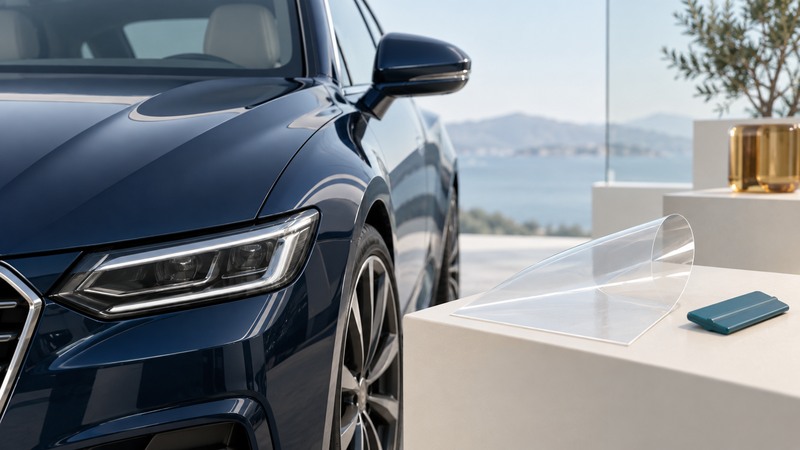
Paint protection film is an adhesive film applied to selected vehicle surfaces to provide a sacrificial protective layer. Decide what you want to protect, inspect the existing finish, then compare identical coverage and product terms. A useful quote explains preparation, edges, exclusions, care and removal as clearly as the price.
Choose the problem before the product
List the surfaces that receive the wear you care about: a front bumper on frequent highway trips, a loading edge, a rocker panel or a high-contact door area. Decide how much visible wear you can accept and how long you expect to keep the car. This creates a basis for choosing targeted coverage or a larger package.
Scroll the table horizontally; keyboard users can focus the table region and use the arrow keys.
| Approach | What to investigate | Tradeoff to discuss |
|---|---|---|
| Paint protection film | A physical film product with stated surface and damage coverage | Visible edges, installation cost, care and eventual removal |
| Ceramic coating | Surface properties such as water behavior and cleaning ease | Preparation, maintenance and the specific protection claimed |
| Routine washing and touch-up | A care plan for the existing finish | Ongoing effort and acceptance of ordinary wear |
Read the actual product documentation. 3M’s Series 150 film information describes its intended protective role, while 3M’s ceramic-coating information describes a different surface treatment. A coating can be compatible with particular films when approved; its name alone does not establish stone-chip protection.
Inspect the paint and define the covered surfaces
Have the installer inspect chips, scratches, contamination, failing clearcoat and previous repairs before quoting preparation. Photograph the finish and disclose repainting. Ask what will remain visible, what requires correction and whether the substrate is suitable for the selected film.
Define coverage panel by panel. “Front package” can mean different things: partial hood versus full hood, different fender coverage, mirrors, bumper openings and exclusions. Ask for a marked diagram or written list showing exposed edges and intended seams. Keep headlights, windshields and sensors outside the scope unless a specifically approved product and applicable requirements have been checked.
A pre-cut pattern may reduce on-vehicle cutting, while custom work may change coverage and edge treatment. Ask how paint is protected during trimming, which components are removed and how they are restored. Obtain written responsibility for any installation damage.
Make installer quotes comparable
- Identify the exact manufacturer, product line, finish and film to be installed. Ask to see a representative completed vehicle in daylight.
- Request the same panel coverage from each shop, including preparation, trim work and edge treatment.
- Ask which appearance effects are normal during the stated curing period and which require correction. Get the follow-up inspection arrangement in writing.
- Separate the film manufacturer’s warranty from the installer’s workmanship commitment. Record who handles each kind of claim and whether labor or removal is included.
- Compare the complete price, applicable tax, downtime and future care requirements. Keep a dated copy before approving work.
Avoid assuming the installation will repay its cost at resale. Use the value you place on appearance and damage protection over your ownership period, with any financial benefit treated as uncertain.
Read the warranty against the risk you care about
XPEL’s warranty information separates product families and terms. 3M’s warranty resources similarly direct owners to the applicable product documentation. Save the version for your country and installed film, the invoice and any required registration.
Check covered defects, exclusions, transferability, proof of purchase and the remedy. A multi-year warranty term should be read as a contractual promise for specified conditions, not a forecast that every surface will look new for that period. Road-impact damage and installation defects may be handled differently.
Ask who evaluates a claim if the installer closes or you move. Record any inspection or reporting requirements. An installer’s verbal assurance should become a written term before it influences the purchase.
Inspect, maintain and plan for removal
At collection, inspect the vehicle under useful lighting and compare it with the coverage plan. Record edges, seams, bubbles, contamination and any disturbed trim. Distinguish items the installer expects to settle during cure from items requiring a correction appointment.
Follow the film-specific waiting period and approved washing products. XPEL’s care instructions distinguish products and cleaning methods; use the section for the film actually installed. Avoid directing pressure-washer jets at edges, and ask before polishing, using solvents or adding a coating.
Photograph lifting, staining or damage and contact the installer before attempting a repair. Discuss professional removal, especially over repainted or deteriorating finishes. Keep the installation date, care instructions and claim contact in the vehicle record so a future owner or detailer can work with accurate information.
Save a practical worksheet
Download the paint protection film worksheet (plain text). Open it in any text editor, save a private copy, and fill in the prompts while you work. It includes the article link and supporting references. Record “unknown” when a question still needs evidence.