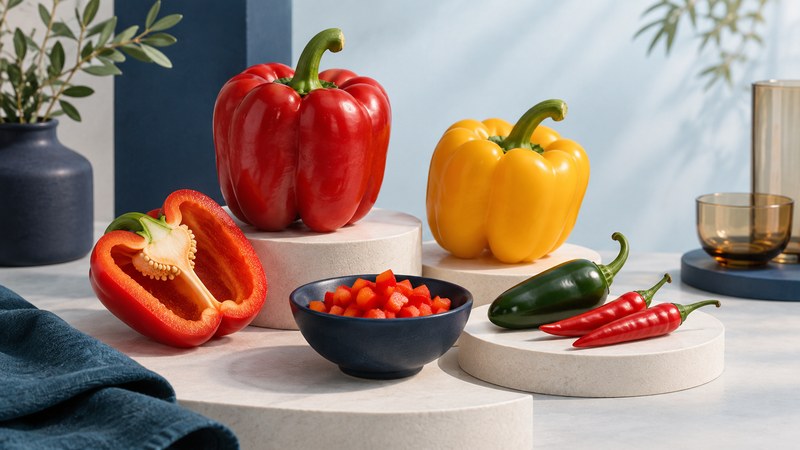
In a recipe, capsicum often means a sweet pepper; in botanical writing, Capsicum is the genus that includes both sweet and hot peppers. First establish whether the dish needs a substantial vegetable, a small amount of chile heat, or a prepared condiment. That choice matters more than the word on its own.
Work out which ingredient the recipe needs
New Zealand’s grower-supported capsicum guide uses the name for sweet peppers. In an ingredient list calling for a whole capsicum cut into strips, a bell pepper is usually the intended purchase. A recipe asking for finely chopped chiles is making a different choice.
On a narrow screen, scroll the table sideways. Keyboard users can focus it and use the arrow keys.
| Recipe asks for | What it contributes | Check before replacing it |
|---|---|---|
| Fresh sweet pepper | Pieces, moisture and vegetable flavor. | Match the cut and prepared weight; choose the color for the flavor you want. |
| Fresh hot chile | Pepper aroma and varying pungency. | Use the named variety where possible; adjust the amount to the diners. |
| Dried chile or paprika | A concentrated dry seasoning. | Match heat and smoke, and follow the quantity written for that form. |
| Pepper relish, paste or sauce | A prepared mixture. | Read for added vinegar, sugar, salt, oil and other spices. |
For example, a spoonful of sweet pepper relish adds sweetness and acidity as well as pepper. It cannot supply the same texture as fresh strips in a stir-fry. When the recipe depends on a particular form, choose a version written for what you have.
Choose heat separately from color
New Mexico State University’s guide to pepper heat explains that capsaicinoids cause pungency, and both genetics and growing conditions affect the result. “Mild” and “hot” are broad descriptions; two peppers of the same named variety can differ.
Use the seller’s variety information and the recipe’s guidance. Redness alone provides too little information to decide how much to add. For a meal shared by people with different tolerances, use sweet pepper for the vegetable portion and offer a clearly labeled hot sauce separately.
For dried red pepper, the paprika guide separates sweet, hot and smoked styles. A hot powder changes a dish much more than a simple color adjustment.
Prepare pieces that cook evenly
- Choose firm peppers with sound, shiny skin. Rinse under running water, dry, and set them on a stable board.
- For sweet peppers, cut into manageable panels and trim away the stalk, seeds and white inner ribs.
- Cut the panels into similar-width strips for quick cooking, or an even dice for a sauce. Keep the size consistent so some pieces do not stay hard while others soften.
- Measure the prepared quantity the recipe requests. A count such as “two peppers” is less repeatable than a specified weight when fruit sizes vary.
When handling hot chiles, wear gloves and keep your hands away from your eyes and nose, as University of Georgia Extension advises. Wash hands and utensils after preparation. Removing seeds and ribs changes the ingredient but does not certify that a hot chile has become mild.
Keep a useful adjustment record
If a finished sauce is too hot, adding more of its unseasoned base lowers the concentration; it also increases the batch. Extra salt or sugar changes the balance without removing the chile. Keep whole sweet peppers in the refrigerator crisper, and follow the label for opened pepper sauces and relishes.
Explore all seasoning and ingredient guides · Food, cooking and meal planning