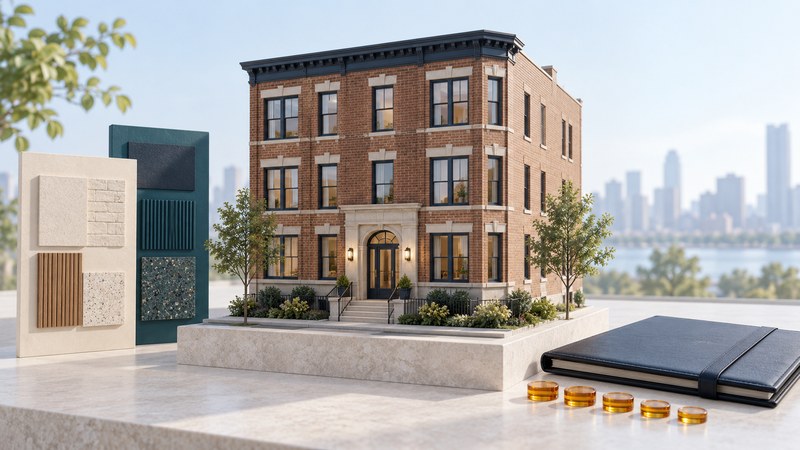
An apartment renovation business case needs evidence that the finished homes will serve residents, lease at supportable rents and cover the full cost of ownership. Test the building, operating assumptions and construction schedule together before treating attractive finishes as an investment strategy.
“Boutique” describes a positioning choice, not a standardized financial category. This guide helps an owner or prospective investor examine a small apartment renovation. All numerical examples are fictional US-dollar scenarios for learning, not market quotations, lending criteria or investment recommendations.
Build a case from actual units and actual expenses
Start with the rent roll, leases, collection history, trailing operating statements, utility bills, tax records and current insurance terms. Reconcile occupied units with rent received. Identify concessions, arrears, owner-paid utilities and expenses temporarily suppressed by deferred maintenance. Ask for explanations when the rent roll and statements disagree.
Choose comparable properties by location, unit size, condition, services, lease terms and dated evidence. Distinguish asking rent from an executed lease. Record concessions and included utilities so a seemingly higher rent is compared on a consistent basis. Use lawful, consistent rental criteria and assess housing needs without steering or screening people by protected characteristics.
Describe the resident benefit concretely: reliable heating, useful storage, repaired windows, improved common areas or a better layout. Obtain contractor and professional assessments before estimating what those changes cost. A design concept should be tested against maintenance needs, building constraints and what comparable residents are actually paying.
Separate essential condition work from optional finishes
Commission the appropriate building, environmental and code reviews. Price hidden-system risk, access, permits, temporary services and project management alongside visible upgrades. For covered pre-1978 housing, use the EPA's RRP guidance for property managers to establish required lead-safe certification and work arrangements with qualified providers. Check the applicable state program and additional requirements before work begins.
Map the project against occupied leases, required notices, habitability obligations and any relocation requirements with local counsel and the property manager. Budget for compliant execution. Keep required repairs distinct from an optional renovation schedule, and do not assume every unit can become vacant on the investor's preferred date.
| Assumption | Evidence | Budget consequence |
|---|---|---|
| Rent after renovation | Dated comparable leases and documented concessions | Use a supportable range, not the highest advertisement |
| Construction scope | Inspections, measured scope and comparable bids | Include systems, professional fees and contingency |
| Units available for work | Leases and lawful occupancy/notice plan | Allow for sequencing and lost collections |
| Operating costs | Bills, tax review, insurance and service quotes | Include management, repairs and owner-paid services |
| Financing and reserves | Actual loan terms, covenants and cash schedule | Model funding gaps and required cash separately |
Show how rent becomes available cash
Keep the definition of each subtotal visible. In the illustration below, net operating income (NOI) equals effective property income less recurring operating expenses. Debt payments, capital work, reserve contributions and owner income taxes are shown separately. Formal underwriting can apply different adjustments; reconcile the lender's definitions before comparing results. The Federal Reserve's commercial-real-estate definitions similarly distinguish NOI from debt service, depreciation and income taxes in that regulation's context.
| Calculation | Base case | Stress case |
|---|---|---|
| Potential rent | 12 × $1,500 × 12 = $216,000 | 12 × $1,400 × 12 = $201,600 |
| Vacancy and collection loss | 8% = −$17,280 | 12% = −$24,192 |
| Effective income | $198,720 | $177,408 |
| Operating expenses | −$90,000 | −$99,000 |
| NOI | $108,720 | $78,408 |
| Annual debt payments | −$72,000 | −$72,000 |
| Cash before reserves, capital work and owner taxes | $36,720 | $6,408 |
This simplified example assumes no other income and that the $90,000 operating budget includes recurring property costs such as management, property tax, insurance, maintenance and owner-paid utilities. It makes no claim about an achievable rent or an adequate expense allowance. Replace every input with property-specific evidence.
Model the construction months separately
A stabilized annual table describes the intended operating state after work and leasing. Build a month-by-month cash schedule for the transition: acquisition, financing draws, construction payments, occupied units, lost collections, concessions and initial leasing. Track the lowest cash balance and the source of funds that covers it.
Also test a higher work cost and a financing change. Identify the assumption that first creates an unacceptable funding gap. A plan that depends on immediate premium rents, uninterrupted occupancy and cost certainty needs more evidence or a smaller scope.
Write the decision before committing
Summarize confirmed facts, unresolved costs, downside cash needs and the conditions for proceeding. Assign owners and dates to missing evidence. Use the facility assessment guide for capital-work priorities. If investing through a pooled offering, read the offering documents and the SEC's private-placement risk guidance; restricted resale, limited disclosure and possible loss require a separate investor review. The investment-manager guide helps organize that discussion.
Download the apartment renovation worksheet. It provides a blank annual comparison and a transition-funding checklist. Attach a monthly schedule and source documents before treating the model as decision-ready.