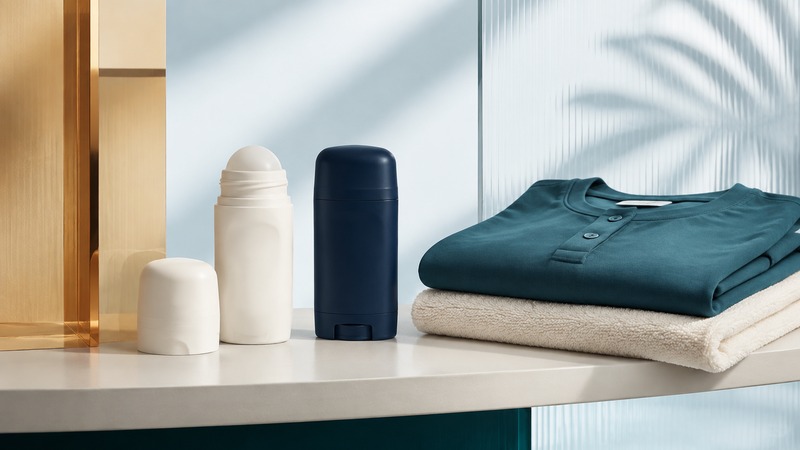
Body odor is common and does not measure someone's cleanliness or worth. Start by separating odor, excessive sweating, and skin irritation: they can occur together, but the same product will not necessarily address all three.
Odor and the amount of sweat are different
Odor develops when sweat interacts with microorganisms on the skin. Areas such as the underarms, feet, and groin are common sources. The American Academy of Dermatology explains how body odor and deodorant use are related. Sweating itself is a normal body function; a noticeable odor does not automatically indicate a disease.
Excessive sweating, called hyperhidrosis, can interfere with clothing, work, or everyday activities. A person may have troublesome wetness without much odor, or odor without unusually heavy sweating. The AAD guide to hyperhidrosis symptoms explains why persistent sweating can merit assessment in its own right.
Begin with location and timing. Is the change on the skin, mainly in a particular shirt or pair of shoes, or associated with breath or urine? Does it occur after exercise, during hot weather, or at other times? Those observations make a pharmacist or clinician's questions easier to answer.
Start with a gentle, workable routine
The NHS body-odor guide recommends washing and drying affected areas, changing and laundering clothes, and using suitable deodorants or antiperspirants. Clean clothing and dry skin are useful parts of care; applying more fragrance is not a substitute for either.
- Wash odor-prone skin regularly and after heavy sweating, then dry it carefully.
- Change damp clothing and socks. Launder reusable items according to their care instructions.
- Choose comfortable clothing and footwear that help you manage moisture.
- If a cleanser or product irritates the skin, stop using it and ask about a gentler option.
Keep the routine practical. A change of shirt after a long commute may be more useful than carrying several competing sprays. If odor seems tied to one item of clothing, compare with a freshly washed alternative before concluding that your body has changed.
Invented example: Someone notices odor mainly after wearing one exercise top, while a clean alternative causes less concern under similar conditions. The clothing deserves attention as well as the skin. This observation does not identify bacteria, prove an infection, or justify antibiotic treatment.
Match the product to the problem
On a small screen, scroll the table sideways to read all columns.
| Product | Main job | What to check |
|---|---|---|
| Deodorant | Reduces or masks odor. | It will not necessarily reduce wetness. Check intended body sites and whether fragrance irritates you. |
| Antiperspirant | Reduces sweating. | Follow the product instructions for application and body site; ask about persistent irritation. |
| Combination product | Addresses both odor and sweating. | Confirm both functions on the label rather than assuming every stick or roll-on does both. |
The AAD's self-care advice for excessive sweating distinguishes these products and recommends following a dermatologist's directions for prescription antiperspirants. More product or more frequent application is not automatically better.
“Whole-body” marketing does not mean a product belongs everywhere. Sensitive skin can become irritated, and fragranced products should not be applied to the groin. Follow the specified sites and warnings; do not apply an underarm product inside the vagina or to other mucosal surfaces. If the concern is vaginal odor with discharge or irritation, seek advice rather than trying to cover it with deodorant; see the NHS guidance on changes in vaginal discharge.
If sweating is the main difficulty, a pharmacist or dermatologist can help select an appropriate treatment. AAD describes options for hyperhidrosis, which may extend beyond nonprescription antiperspirants. Treatment depends on the pattern, cause, and side effects, not simply the strength of a fragrance.
Persistent or changing odor deserves a respectful assessment
Arrange a medical review if a reasonable care routine has not helped, the smell changes noticeably, sweating suddenly increases, or the concern is affecting your confidence or social life. Mention new medicines and supplements, skin symptoms, and where the odor appears to originate. Do not stop a prescribed medicine on your own.
Download a body-odor care and observation record (CSV). It has space for timing, location, sweating, clothing, products tried, irritation, and questions. Its purpose is to reduce guesswork during a conversation, not to grade hygiene or diagnose a metabolic condition.
An uncommon condition called trimethylaminuria can cause a fish-like odor in sweat, urine, and breath because the body has difficulty processing trimethylamine. Odor can vary over time. MedlinePlus Genetics explains trimethylaminuria. An odor description alone is not enough to establish this diagnosis, and ordinary underarm odor should not lead straight to a rare-disease conclusion.
Do not start antibiotics, high-dose supplements, or a restrictive diet based on an online odor checklist. If a metabolic cause is suspected, assessment and any dietary changes need professional guidance. The University Hospitals Birmingham information on dietary management of trimethylaminuria (PDF) describes specialist care rather than a general diet for body odor.
You can ask for help with the distress as well as the physical concern. Explain if worry about odor is keeping you away from work, relationships, or ordinary activities. A useful consultation should take both the symptoms and their impact seriously.
Related resources
Researched and updated September 6, 2026. General health information, not an individual diagnosis or treatment plan. Sources are linked beside the relevant information.