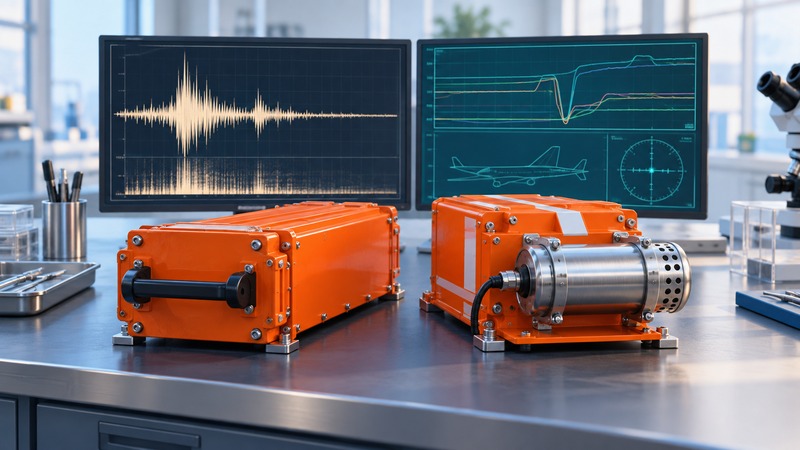
Aircraft flight recorders help investigators reconstruct a sequence of events. A cockpit voice recorder captures sound; a flight data recorder captures selected aircraft parameters over time. Their value comes from relating those records to each other and to other evidence. This guide helps a reader follow an investigation without treating the recovery of a recorder as the completion of the explanation.
On a narrow screen, scroll tables sideways. Keyboard users can focus a table and use the arrow keys.
Two complementary kinds of record
The NTSB’s flight-recorder overview describes cockpit audio, radio transmissions and aircraft parameters such as altitude, airspeed and heading. Equipment and recording capabilities vary by aircraft and installation, so an investigation’s recorder report is the source for what a particular unit actually captured.
| Record | What it can contribute | What to check in the report |
|---|---|---|
| Cockpit voice recorder (CVR) | Speech, communications and relevant cockpit sounds | Recovered interval, audio quality, timing and transcript conventions. |
| Flight data recorder (FDR) | A time series of the parameters selected for recording | Parameter definitions, units, sampling, validity and recovered period. |
| Other investigation evidence | Context from physical evidence, records and interviews | How it supports or challenges the reconstructed sequence. |
Many units are bright orange to aid recovery despite the familiar “black box” name. The protective enclosure and a water-activated locator beacon serve different purposes: preserving recorded information and helping locate the equipment. For a specific search, use the investigating authority’s description of the installed equipment and search progress.
From recovered hardware to a timeline
Recovery is followed by examination and readout. Investigators assess the condition of the unit and obtain the recoverable information. The data then need interpretation: a stored numerical value acquires meaning through its parameter definition and the aircraft’s recording arrangement.
Timing is especially important. Audio events and numerical traces may need to be aligned with other records. The NTSB explains that investigators use sources such as air traffic control recordings and their time codes when establishing event timing. A polished animation is a visualization of reconstructed evidence; its appearance alone cannot establish how complete the underlying measurements are.
When reading an update, identify the stage it describes: recorder located, recorder recovered, data downloaded, a factual report issued, or final analysis completed. Each is useful progress with a different meaning. Keep the authority’s exact description and date beside your notes.
Separate the observation from the explanation
A fictional evidence-reading exercise
Suppose a report shows an alert on the audio at timeline second 10 and a change in a recorded parameter at second 12. You can describe that ordering only after confirming the clocks are aligned. The two-second interval alone cannot establish why the parameter changed or what information was available to the crew.
Next ask which parameter was recorded, how frequently it was sampled, and whether any interval is missing. Identify the source of a claim: the transcript, a data plot, a factual specialist report or the final analysis. Write an unresolved question instead of supplying a motive or mechanism the evidence has yet to establish.
This discipline is useful when comparing news reports. “Recorder found” and “cause determined” describe different milestones. A quotation from an early briefing should retain its date and uncertainty as later evidence emerges. If a preliminary interpretation is revised, update the explanation and the source together.
Follow the authority’s reports
The NTSB’s investigative process explains how evidence gathering, analysis, probable-cause findings and safety recommendations fit together in U.S. investigations. For an accident elsewhere, begin with the authority leading that investigation and its official releases.
For a case you are following, keep three columns in your notes: established observation, source and date, and unresolved interpretation. Add the case identifier so similarly named flights or aircraft are not mixed together. Look for the final report’s explanation of how competing possibilities were evaluated, then read the safety recommendations for the changes the authority considers useful.
Access to recordings also depends on jurisdiction. The NTSB explains that it does not publicly release CVR audio; release of pertinent transcript portions follows specific rules. Use its authorized transcript and reports when available. This article provides a way to interpret published evidence, while the investigation record establishes the facts of an individual event.