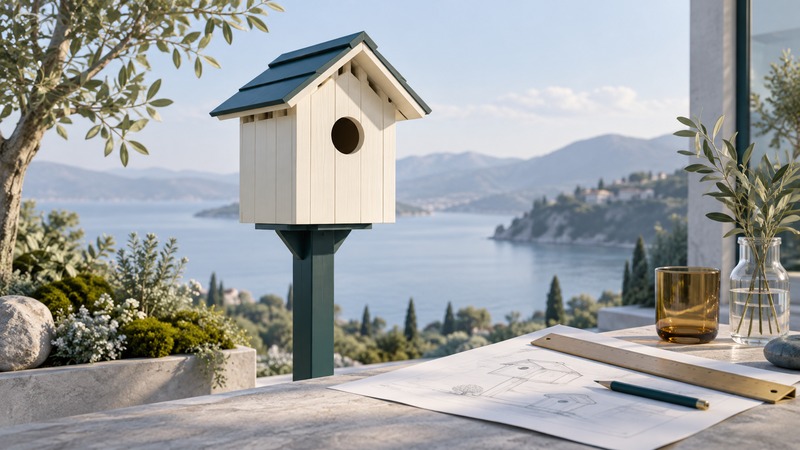
Choose the bird before choosing the box. A nest box serves a particular cavity-nesting species in suitable habitat; its entrance, floor space, mounting, and location should come from a plan for that species. An attractive decorative house can leave those requirements unanswered.
Find a plausible local occupant
Begin with birds that breed in your region and the habitat around the proposed site. Record whether the area is open grassland, a wooded edge, a garden, or another habitat. Cornell’s NestWatch birdhouse resources link to the Right Bird, Right House tool, which pairs species with habitat and construction plans.
Open a candidate species page and compare its range and habitat with the site. Then save its construction plan and placement guidance together. A box that matches an entrance dimension but misses the habitat requirement has only solved part of the problem.
If the site does not fit a likely nest-box user, improve habitat or choose a different wildlife project. Occupancy depends on more than the box, and an empty box alone gives little information about which factor matters.
Read a kit as a set of construction details
Check the actual dimensions against the selected plan, including entrance, interior floor, depth, and material thickness. Confirm that the supplied lumber and hardware produce those dimensions after assembly. Avoid enlarging the entrance to attract more kinds of birds; it changes which animals can access the cavity.
NestWatch’s features of a good birdhouse include untreated wood, drainage, ventilation, an overhanging roof, interior purchase for young birds to climb, and access for cleaning. It recommends walls at least three-quarters of an inch thick, a secure closure, and predator protection. Exterior perches are unnecessary and can assist predators.
Before buying a kit, ask to see its plan and how it opens. A sealed decorative box is difficult to inspect or maintain. For a home build, work from the species plan rather than estimating proportions from a photograph.
Choose a maintainable mounting location
Use the species-specific placement instructions for height, habitat, spacing, and orientation. The general NestWatch placement guide discusses stable mounting and how location affects exposure and predator access.
Walk the site before installation. Can you reach it for responsible checks and end-of-season maintenance? Will routine mowing, people, pets, or growing vegetation alter access? Choose compatible mounting and predator protection from the plan; a convenient branch is not automatically a suitable support.
Observe with a protocol
Set up a record before nesting begins: species intended, plan source, dimensions, location, installation date, and maintenance access. Photograph the empty setup so later changes can be understood.
Follow NestWatch’s monitoring instructions and code of conduct before checking an occupied nest. Timing and approach matter, and disturbance should be minimized. Resolve uncertainty about occupancy or intervention with a knowledgeable local wildlife organization and the applicable rules.
Keep observations factual: adult seen entering, material being carried, condition of the box, and date. Separate observation from inference about nesting success. Review the site and construction between nesting attempts or after the season when the monitoring guidance permits maintenance. A responsible nest-box project includes the care after installation.