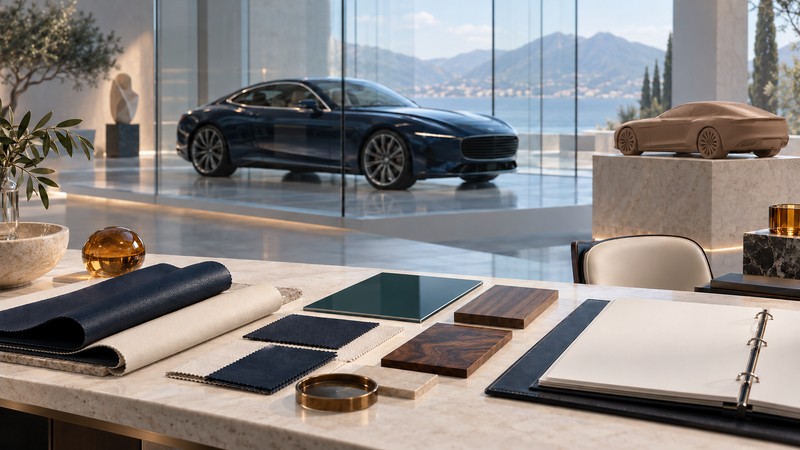
A useful Mulliner brief turns a visual idea into a documented specification: identify the kind of commission, agree the materials and details, and preserve the approved record. The same discipline helps a later buyer understand what a particular Bentley was commissioned to be.
Start with the exact model, model year and the scope of the proposed work. Keep a named model or equipment specification, an individual bespoke request and a coachbuilt project distinct in the paperwork. Each needs evidence appropriate to the claim being made.
Identify the kind of Mulliner work
Bentley’s Mulliner overview describes curated features, bespoke commissions and coachbuilt work. The bespoke section gives examples such as finishes, veneers, embroidery and personal details developed with the design team through a retailer. The coachbuilt section separately describes very limited series and individual vehicles.
Use those categories to ask a precise opening question: which parts of this car’s specification are being selected, individually developed or created as part of a coachbuilt project? Have the retailer identify the exact programme and its applicable documentation. Availability, feasibility and the commercial terms need confirmation for the particular request.
On a narrow screen, scroll the table sideways. Keyboard users can focus the table region and use the arrow keys.
| Description being used | Record to request | Question it should resolve |
|---|---|---|
| Named model or equipment specification | Model-year literature and VIN-linked factory specification. | Which listed features belong to this particular car? |
| Individual bespoke commission | Approved design brief, material references and final order details. | Which details were individually agreed, and how were they recorded? |
| Coachbuilt project | Project identification and manufacturer documentation for the vehicle. | Which programme and specific vehicle does the claim describe? |
| Later alteration | Dated work order and identification of the firm that performed it. | What changed after the documented factory or commissioning specification? |
Build the brief around decisions that can be approved
Begin with use and atmosphere: daily or occasional travel, usual passengers, the colours and textures you want to live with, and the details that matter most. Identify essential choices and areas where you welcome alternatives. Bring reference images or objects as starting points, then ask how the intended effect can be represented in an agreed sample or drawing.
- Colour and material: request the exact reference used for approval, including finish and the intended location. Review related samples together under more than one lighting condition.
- Pattern and placement: agree the scale, orientation and location of stitching, embroidery or other personal details using a clear drawing or sample.
- Interfaces: record how adjoining materials, seat panels, trim edges and repeated motifs should relate.
- Practical care: ask for care instructions and discuss how the proposed finish suits the intended use before approving it.
- Changes: keep a dated revision list, identifying the approved version and any questions still open.
These are preparation questions for a commissioning discussion, not a claim that every request is offered. Ask the retailer to document what is feasible, what remains subject to confirmation and which decisions affect the agreed terms. Store personal design files and identifiers privately.
Make the final record easy to reconcile
Before final approval, walk through the brief one item at a time. Each decision should point to its agreed colour or material reference, drawing, sample or written description. Resolve conflicts between an early inspiration image and the final specification, and mark superseded versions clearly.
At handover, compare the delivered car with the agreed record and note any differences for resolution through the retailer. Keep the final specification, relevant correspondence, invoices and care information together. The useful record explains what was approved and delivered; a collection of attractive photographs alone leaves those decisions harder to reconstruct.
Read a used-car claim through its documents
For a later purchase, begin with the VIN and exact claim in the listing. Ask for the factory specification and any available commissioning documentation, then reconcile those records with the installed features. A distinctive colour, trim pattern or badge is a lead to investigate; documentary evidence establishes its origin and scope.
Record subsequent refinishing, upholstery work or additions separately, with dates and the responsible workshop. Ask a suitable Bentley specialist to assess present condition and explain any discrepancies. Keep originality, workmanship, condition and your personal preference as separate observations so one appealing detail does not answer every question.
For the earlier Continental GT equipment package, see the 2005 Mulliner Driving Specification guide. Its period package describes a different scope from an individual commissioning brief.
Keep the brief and provenance together
Download the Mulliner commission and provenance brief. Use the commissioning fields for a proposed car and the provenance fields for an existing one; leave unsupported claims explicitly unresolved.
Explore Autos: vehicle guides, technology and design · Cars: buying, maintenance and ownership