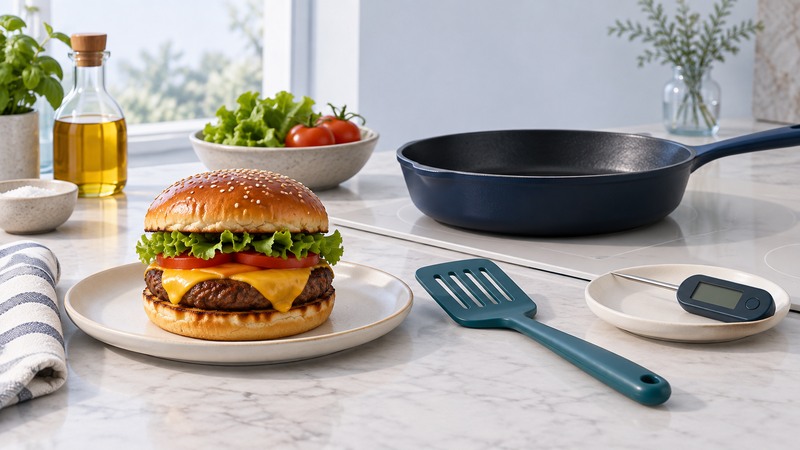
For a dependable cheeseburger, make patties of similar thickness and use an instant-read food thermometer. Ground beef needs to reach 160°F in the center. Browning and elapsed cooking time help you manage the pan, but they do not replace the temperature check.
Four skillet cheeseburgers
Yield: four burgers. Plan: about 15 minutes to prepare and roughly 8–12 minutes for a batch to cook, with extra time as needed to reach temperature. Use a heavy skillet large enough to leave space between patties, a spatula, a thermometer and a clean serving plate. Cook in batches if necessary.
- 1 pound (454 g) ground beef, about 80% lean / 20% fat
- ½ teaspoon fine salt and ¼ teaspoon ground black pepper
- 1 teaspoon neutral cooking oil, if the skillet needs it
- 4 slices cheese, such as cheddar or Monterey Jack
- 4 burger buns; lettuce, sliced tomato, pickles and condiments as desired
The 80/20 blend is a texture choice for this method; leaner meat generally needs more attention to avoid drying. Keep beef refrigerated until shaping and cooking. Prepare toppings first on a clean board, then handle the raw beef separately. Wash hands and clean raw-meat equipment before assembling the cooked burgers.
Shape, cook and check
- Shape evenly. Divide the beef into four portions of about 113 g. Gently form patties about 4 inches across and ½ inch thick, making a shallow indentation in the center. Handle just enough to hold them together. Season the outside with the measured salt and pepper.
- Heat the skillet. Set it over medium-high heat and add a thin film of oil if needed. Aim for a steady sizzle when the beef touches the pan. Reduce heat if the oil smokes heavily or the surfaces blacken quickly.
- Brown the first side. Place the patties with space between them. Begin checking the underside after about 3–4 minutes. Flip when browned and released from the pan; avoid repeatedly pressing out the juices.
- Measure the center. After about 3 minutes on the second side, insert the thermometer from the side so its sensing area reaches the middle. Check each patty. Continue cooking, turning and adjusting heat as needed, until each reaches 160°F. Clean the probe after checking undercooked meat.
- Melt and assemble. Add cheese as the burgers approach the endpoint; briefly cover the skillet if needed to melt it. Confirm the beef’s final temperature, transfer with clean utensils to a clean plate, and assemble in the buns with toppings.
USDA specifies 160°F for ground beef. For thin foods, USDA’s thermometer instructions recommend inserting the probe from the side to position the sensing area correctly. Check your thermometer’s sensing length; a thick dial stem may be unsuitable for a thin patty. Color inside the burger can vary even at the same measured temperature.
Adapt the method to a grill
Use a grill only in the location and manner its manufacturer permits. Preheat it and arrange a lower-heat area so you can move patties if the exterior browns too quickly or fat causes flare-ups. Keep the same patty size and temperature endpoint. Wind, grill design and starting temperature change the timing. Carry cooked burgers on a clean plate with utensils that have not just handled raw beef.
Ground chicken or turkey requires 165°F and can cook differently; choose a method intended for that meat. Whole-steak doneness guidance belongs to a different cut and does not set the endpoint for a ground-beef patty.
Adjust the next batch
Scroll the table sideways. With a keyboard, focus the table and use the arrow keys.
| What happens | Likely contributor | Useful adjustment |
|---|---|---|
| Outside burns before center reaches 160°F | Excess heat or a thick patty | Lower heat, turn as needed and keep measuring; shape the next batch more evenly. |
| Burger feels dense | Heavy mixing or compression | Handle gently and avoid working seasoning throughout the meat. |
| Burger is dry | Lean blend, pressing or cooking well beyond the endpoint | Try the stated blend, stop pressing and begin measuring earlier. |
| Burger domes | Center and edge cook unevenly | Use a shallow center indentation and consistent thickness. |
Serve and save leftovers
Serve promptly. Refrigerate leftovers in shallow containers within two hours outside temperature control, or one hour above 90°F. Use refrigerated cooked leftovers within 3–4 days and reheat to 165°F, following USDA’s leftover guidance. This is an editorial cooking method checked against food-safety guidance; Yenra has not kitchen-tested it.