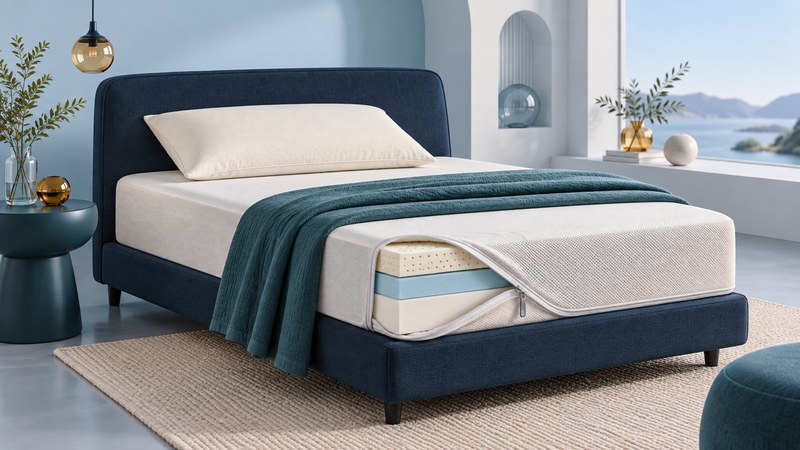
Allergen-barrier bedding encloses a mattress or pillow to reduce contact with allergens from material inside it. A useful purchase starts with the allergy you are trying to manage, then the cover’s construction and care requirements. The label alone cannot predict how much better you will feel.
Match the purchase to the actual allergy
Dust-mite allergy is a reaction to mite-related particles in household dust. Bedding is one relevant exposure source, alongside other soft furnishings. Symptoms can also involve pollen, pets, or mold. AAAAI explains common indoor allergens. If the trigger is uncertain, discuss the symptom pattern and whether testing would change your plan.
For people with asthma and relevant dust-mite sensitization or symptoms, the 2020 U.S. focused asthma guideline recommends impermeable mattress and pillow covers as part of several coordinated measures. It found that covers used alone did not improve the main asthma outcomes evaluated. This is a specific asthma recommendation, not a universal prediction for every person with nasal allergies.
Keep two questions separate: does the cover reduce exposure under its test conditions, and does using it improve symptoms in people like you? A fabric-performance claim answers the first more directly than the second. Continue the treatment plan agreed with your clinician while assessing any environmental changes.
Compare the complete encasement
Measure the mattress length, width, and depth, including any topper you intend to enclose. Check pillow dimensions as well. A fitted sheet or a pad that covers only the top is a different construction from an encasement surrounding the whole item.
On a small screen, scroll the table sideways to read all columns.
| Feature | What to verify | Why it helps |
|---|---|---|
| Coverage | Full enclosure, with a closure designed for the claimed barrier | Clarifies the difference from a top-only pad |
| Fit | Actual dimensions and permitted mattress depth | Helps avoid strained seams and unusable sizing |
| Care | Wash and dry instructions for this exact model | Makes ongoing use feasible |
| Comfort | Fabric feel, noise, heat, and return conditions | Helps you keep the cover in regular use |
| Evidence | Named allergen claim and supporting test information | Lets you compare the claim being made |
Ask the seller what supports the specific allergen-barrier claim and whether the testing covers the complete product or only a fabric sample. Words such as “hypoallergenic,” “natural,” or “luxury” do not tell you what was tested. Record the answer, not just the marketing phrase.
Make the bedroom plan manageable
Regular laundering of sheets and other bedding, attention to humidity, and dust control can be combined with encasements. AAAAI recommends washing bedding weekly. Its dust-mite practice parameter discusses the value of washing and the scalding risk of raising household hot-water temperatures. Follow textile care labels and appliance instructions rather than changing a water heater setting solely for bedding.
Use a humidity meter if you are investigating damp conditions. The same parameter recommends roughly 35–50% relative humidity to discourage mite growth. A reading is useful context, not proof of a particular exposure. Persistent leaks or dampness may need a building repair rather than another bedding purchase.
- Choose a realistic laundry day and check that bedding dries fully before use.
- Follow the encasement maker’s separate washing instructions; its schedule may differ from the sheets.
- Inspect zippers, seams, and fabric after care. Replace or repair according to the maker’s advice when integrity is lost.
- Discuss which additional measures fit the identified trigger, housing, and budget.
For asthma, the NHLBI indoor-allergen fact sheet supports combining relevant measures. Prioritize achievable changes instead of attempting to replace every bedroom item at once.
Check usefulness over time
Before making changes, note which symptoms disrupt sleep or daily life and what treatments you already use. Record the date of each change, laundry or moisture problems, and any clinician-directed medicine changes. That context helps interpret improvement or persistence without assigning all of it to one purchase.
Download the encasement comparison and care checklist (plain text). It includes space for measurements, care requirements, evidence questions, and a review date. Ongoing troublesome symptoms deserve an allergy or asthma review rather than repeated product upgrades.
Researched and updated October 2, 2026. General information for planning and discussion; individual care and technical decisions depend on the circumstances. Sources are linked beside the claims they support.