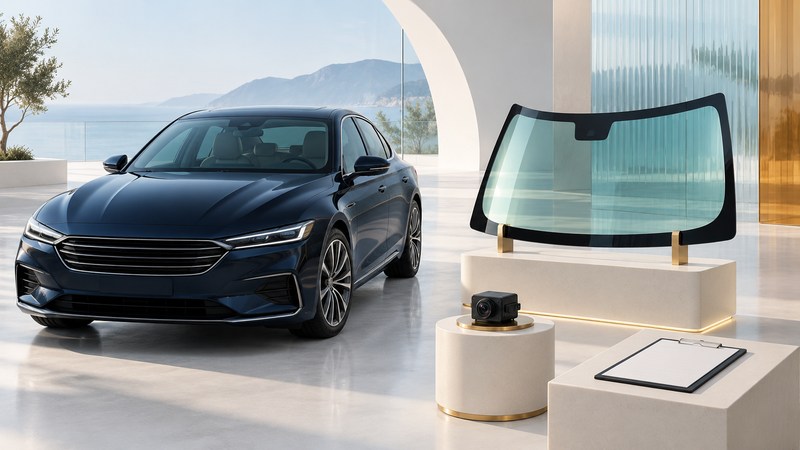
A windshield service decision has three parts: what can be done about the damage, which glass and related work the vehicle requires, and when the completed vehicle can return to service. Ask for a written proposal that addresses all three.
Use this guide to prepare for a qualified glass shop. It focuses on windshields in passenger cars and light trucks, including vehicles with cameras behind the glass. Glass construction, damage location and vehicle equipment affect the job, so a photograph or a generic chip-size rule is only part of the assessment.
Describe the damage and the vehicle
Give the shop the VIN, model year and equipment details. While parked, photograph the damage from useful angles and note its location, when it appeared, whether it has changed, and any water entry or visibility problem. Tell the shop about earlier glass replacement or body repairs and any new dashboard message.
Ask whether repair is appropriate and what result to expect, or why replacement is recommended. Ask specifically about damage in the driver's view or a camera's viewing area. Honda's 2024 HR-V camera instructions, for example, discuss how windshield damage or work in that area can affect the system. That model-specific guidance is a reason to check the actual vehicle's procedure.
When damage obstructs your view or the shop advises that driving is unsafe, arrange assistance instead of driving to compare quotations. A service appointment should include a transport plan when the car cannot safely reach the installer.
Compare the same scope of work
On a narrow screen, scroll the table sideways. Keyboard users can focus the table region and use the arrow keys.
| Item | Ask the provider | Useful written detail |
|---|---|---|
| Glass | Which part matches this VIN and its fitted features? | Part identity and compatibility with camera, head-up display, heating or other applicable equipment. |
| Installation | What conditions and materials does the job require? | Workshop/mobile arrangement, included trim/materials and how unexpected damage will be handled. |
| Camera work | Which manufacturer procedure applies? | Required aiming/calibration, who performs it and completion documentation. |
| Release | When may this installation be driven? | Specific release time, remaining restrictions and aftercare. |
| Price and follow-up | What is included and what could change? | Itemized price, taxes, approval for extras, warranty terms and contact for concerns. |
For an insurance claim, get the insurer's coverage and payment explanation and the installer's work scope separately. Record any deductible and disputed item. Shop-selection rights and coverage rules depend on the policy and jurisdiction; resolve them with the relevant parties before authorizing the work.
Confirm the equipment-specific requirements
A windshield that fits the opening still has to suit the vehicle's fitted systems. American Honda's June 2018 glass position statement discusses replacement glass for camera-based driver assistance and head-up displays, including using the VIN for parts identification. Treat that as Honda/Acura guidance within its stated scope, not a universal rule for every brand.
Ask the installer to identify the current procedure for your exact vehicle. If aiming or calibration is required, agree who will do it, where it will happen and what evidence you will receive. “The warning light is off” leaves those questions unanswered. If the procedure cannot be completed, request a documented next step and the restrictions on using the vehicle and its features.
For the driver's perspective on these systems, see Lane Departure Warning. A generic road demonstration is not a substitute for the manufacturer-specified calibration process.
Leave with a clear release and aftercare record
The Sika auto-glass replacement guideline explains that minimum drive-away time depends on the adhesive and installation conditions, including temperature and humidity. Ask the installer for the release time for this actual job. A time quoted by another shop for another product does not establish yours.
Before accepting the handover, review the invoice and glass identity, applicable camera-work result, release time and aftercare instructions. Ask whom to contact about water entry, wind noise, visual distortion, loose trim or assistance-system messages. Record what you observe and when it occurs; arrange professional review rather than experimenting with the camera or bonded glass.
Save the quotation and handover checklist
Download the glass-service checklist. Fill it in before booking and again at collection. Keep it with the invoice, photographs and calibration documentation.
Explore Autos: vehicle guides, technology and design · Cars: buying, maintenance and ownership