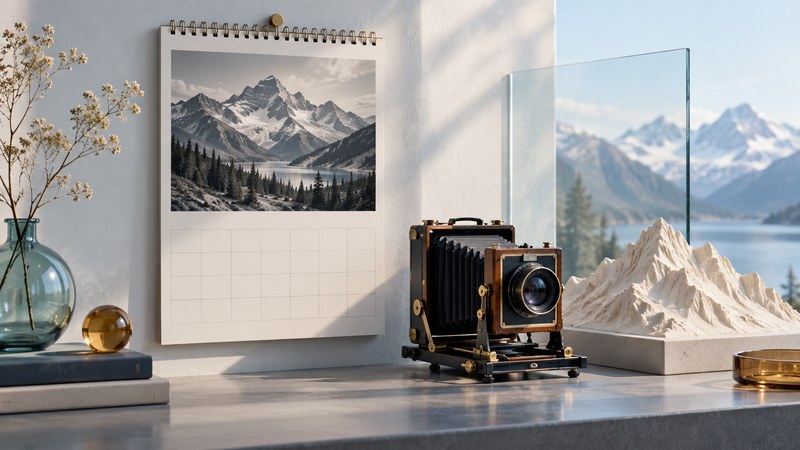
An Ansel Adams calendar offers two experiences: a practical way to keep dates visible and a changing display of landscape photographs. Judge both. Look at the interior images and date pages, establish the exact edition, and decide where you will actually view or write in it.
Match the format to the way you look
A wall calendar lets a photograph hold a place in the room for a month. Measure the space with the calendar fully open, including the hanging point and room to turn the page. From your normal viewing distance, consider whether the image and date grid will both be legible.
An engagement calendar belongs closer to hand. Inspect a complete weekly spread for writing space, binding clearance, and the balance between photographs and appointments. If you want frequent encounters with the images while planning, this can be a more useful arrangement than a wall display.
For an edition-specific example, the Gallery’s 2026 wall-calendar description identifies Little, Brown and Company, authorization by the Ansel Adams Publishing Rights Trust, wire binding, and duotone reproduction. Treat these as details of that named edition. Check the relevant edition’s listing when comparing another year or format.
Give each photograph a closer look
Begin with a minute of looking before reading the caption. Find the brightest area, the deepest dark, and the route your eye takes between them. Then move closer and inspect what remains visible in the middle tones: cloud layers, rock texture, water, or foliage.
- Light: where does it separate the foreground from the distance? Which surfaces become prominent?
- Edges and shapes: notice a ridge, tree line, horizon, or cloud boundary. Ask how it divides the rectangle.
- Scale: look for a tree, building, or familiar natural feature that helps you judge distance.
- Timing: consider how a different sky or sun angle would change the relationships you see.
These are looking prompts, not claims about a particular photograph’s exposure or darkroom treatment. For historical facts, read the image title and caption, then follow the Ansel Adams Gallery to the relevant photograph or educational material. A calendar reproduction is a starting point for that exploration.
Check the exact edition and the actual copy
Record the title, calendar year, format, publisher, and ISBN or other product identifier. Match the interior preview to that record. A seller can reuse a cover photograph or retain a listing after its usable year has passed, so the title alone leaves important questions unanswered.
For a secondhand copy, ask about writing, missing leaves, damaged spiral binding, folds, and marks through the photographs. Decide whether your purpose is current planning, enjoying the pictures, or collecting a specific edition. Each purpose gives a different meaning to condition.
Make a small monthly viewing routine
When you turn the page, read the title and location, write one observation about the image, and look again a week later under your room’s usual lighting. A changing light level or viewing distance may draw your attention to a different part of the composition.
Keep the calendar away from splashes and places where its pages will repeatedly catch on nearby objects. If you want to retain an image after the year ends, consider whether dismantling the calendar fits your purpose; a complete edition and a separated page are different objects. For a wall display intended to last, consult appropriate framing guidance for the paper and print.
Compare total cost and remaining usable pages only after settling the format and image selection. The general Calendars guide below provides a worked value comparison.