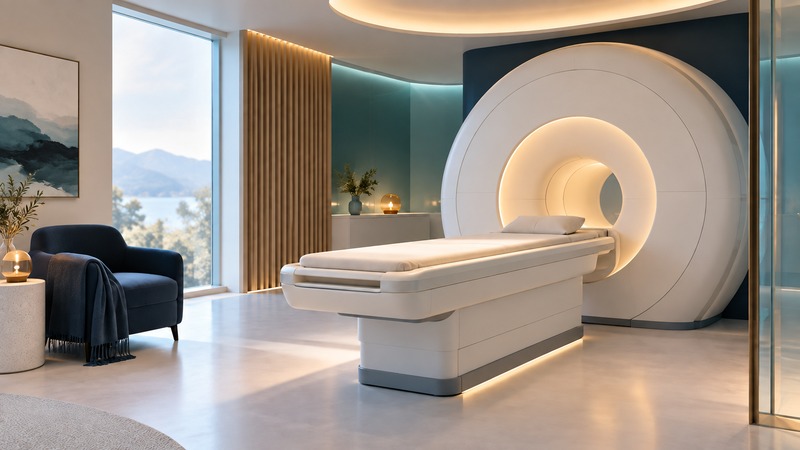
The sights, sounds and pace of an imaging appointment can affect how manageable it feels. Tell the imaging unit what is difficult for you and what has helped before. A specific request made in advance gives staff a better chance to arrange useful support.
Ambient lighting, ceiling images or music are options some facilities offer. Preferences differ: a moving projection may reassure one person and overwhelm another. The goal is a workable examination with clear communication and appropriate comfort, using options the unit can safely provide.
Describe the need before choosing a feature
Start with one or two concrete observations: sudden noises are difficult; lying flat increases pain; instructions are easier to follow one at a time; or enclosed spaces cause panic. Tell staff about a previous incomplete scan and what happened. This helps them identify the part of the appointment that needs planning.
- Light: ask whether brightness, color or moving imagery can be adjusted.
- Sound: discuss required hearing protection, available music and how instructions will be heard.
- Communication: ask staff to explain touch or movement before it happens and agree how to request help.
- Position: discuss pain, mobility aids, transfers and permitted supports.
- Predictability: ask for a description of the room, the sequence and which parts require stillness.
Ask the unit to record the agreed arrangements. If a feature is unavailable, ask what alternative could serve the same need. For example, spoken updates may help someone who cannot use the offered visual display.
Keep comfort choices within MRI safety screening
For MRI, room access and equipment are controlled because of the magnetic environment. RadiologyInfo's MRI safety guidance explains screening for implants, devices and metal. Tell staff about medical equipment and use only items they approve in the scanning area. Personal headphones, phones, toys, weighted products and other familiar objects need explicit screening.
Ask how you will communicate during the scan, what signal requests a pause and when staff can respond. Confirm which ear protection will be provided and how it will fit. Explain hearing, vision or language needs before positioning begins.
The MRI preparation guide from RadiologyInfo recommends discussing anxiety or claustrophobia before the examination. Equipment design, the body area being scanned and the examination requirements affect the available options. Yenra's MRI machine guide explains scanner layouts and appointment preparation.
Make preparation concrete for a child
Ask for age-appropriate information, a play specialist or a practice opportunity if offered. Great Ormond Street Hospital's MRI information describes child preparation and different approaches to completing scans. The right plan depends on the child and the examination.
Tell the team how the child communicates discomfort, what words or pictures help, and what may trigger distress. Ask whether a parent or support person can remain nearby and what screening they need. Avoid promising a silent or completely sensation-free experience; ask staff for an accurate description you can use at home.
Discuss additional support early
If environmental adjustments may be insufficient, contact the unit before the scan. RadiologyInfo explains relaxation approaches, sedation and anesthesia, including the need for individualized preparation and monitoring. A clinician must decide what is suitable.
When sedation or anesthesia is planned, obtain the exact instructions for eating, drinking, medicines, transport and recovery. Arrange the required escort. Do not take someone else's sedative or add a medicine without the team's agreement. Comfort preferences and medical preparation should be recorded together so the appointment can proceed safely.
Afterwards, note what worked and what should change next time. A short account can make a future appointment easier to plan. Keep it with your portable health information, separate from the radiology result.
A resource for the conversation
Save the scan comfort: preferences to discuss before the appointment (editable text). Fill it in with the responsible team and keep your completed copy privately.
General patient education. Follow your clinical team's instructions for your care. Explore the medical guides.