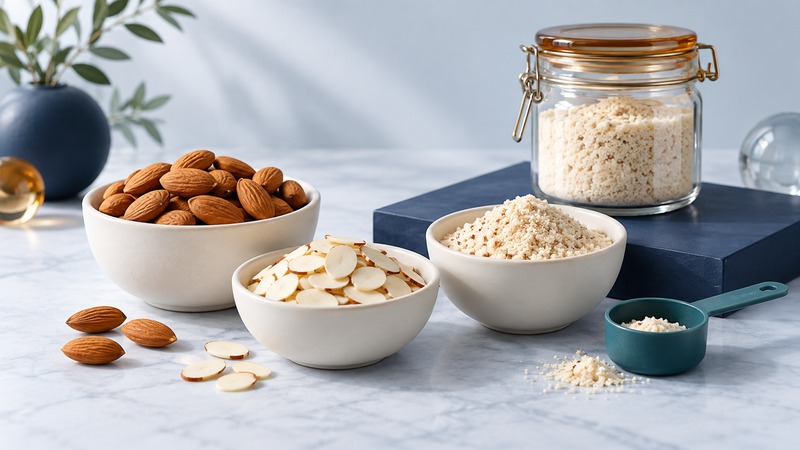
Whole almonds suit snacking and chopping; thinner cuts distribute crunch across a dish. Choose the form for the job, then buy an amount you can use while it still tastes fresh. This guide focuses on shopping and cooking; historical coverage of almond health research provides context for earlier nutrition claims.
Match the cut to the recipe
Focus the table and use the arrow keys to scroll sideways.
| Form | Useful for | Practical check |
|---|---|---|
| Whole | Snacks, coarse chopping, roasting | Raw, dry-roasted, oil-roasted and seasoned packages differ |
| Sliced | Salads, cereal, delicate toppings | Thin pieces brown quickly; watch closely |
| Slivered | Pilafs and visible crunchy garnishes | A thicker bite than slices |
| Flour or finely ground | Recipes designed for ground nuts | Blanched flour and skin-on meal can differ in texture and appearance |
The Almond Board’s forms guide shows the main cuts. Almond flour needs a recipe designed for its properties; replacing wheat flour cup-for-cup changes structure and moisture. Check ingredient lists on coated or flavored almonds for additions and allergens.
Use grams for a repeatable portion
The Blue Diamond Whole Natural Almonds label for UPC 887335151573 lists 160 calories per 28 g. Using that specific label, 14 g is approximately 80 calories and 42 g approximately 240. Calculate label value × your grams ÷ labeled grams; rounded label values make the result an estimate.
A small kitchen scale is more repeatable than counting kernels of different sizes. Weigh a bowl empty, zero the scale, then add the amount you want. Keep toppings separate when estimating a finished snack: chocolate, dried fruit and sweetened coatings contribute their own portions.
Toast a small batch of whole almonds
Use 140 g plain whole almonds, a rimmed baking sheet and an oven heated to 350°F (175°C). Spread in one layer. The Almond Board’s whole-almond method gives about 7–10 minutes, until golden and fragrant. Check early and stir for even exposure; ovens and nut size vary. Move them off the hot tray to cool before judging their final crunch.
For an optional savory finish, toss the warm batch with 1 teaspoon olive oil and ⅛ teaspoon fine salt. These seasoning amounts are Yenra’s starting proportions. Cool fully before sealing. This kitchen toasting step develops flavor; it is not a validated food-safety treatment for recalled or contaminated nuts.
If the first batch tastes bitter or scorched, shorten the next bake and check the oven temperature. Sliced almonds need their own closer observation; the whole-almond timing is not a universal timer for every cut.
Protect the portion you save
Reseal the package or use a clean airtight container away from heat and strong odors. Date the container and follow package storage instructions. Almond Board shelf-life guidance explains how temperature, moisture, oxygen, processing and packaging affect quality; commercial shelf-life figures depend on controlled conditions.
Buy a smaller bag when you use almonds occasionally. Before adding them to a large recipe, taste a sound-looking kernel for stale or rancid flavor. Discard visibly moldy nuts. Almonds are tree nuts; check the full label and the needs of anyone sharing the dish.