Inventory management gets stronger in 2026 when AI is treated as an operating layer across planning, replenishment, storage, accuracy, and recovery rather than as a forecasting widget bolted onto an ERP. The most credible gains now come from time-series forecasting, replenishment, inventory visibility, slotting optimization, RFID, and cycle counting workflows that keep physical stock and system records aligned.
That matters because the hard problems are operational, not theoretical. Teams are trying to sense demand shifts earlier, reorder with less manual work, place inventory in the right facility, keep available-to-promise data trustworthy, reduce waste from aging stock, and recover value from returns. The strongest systems therefore combine models with live execution signals and clear exception-handling paths.
This update reflects the category as of March 22, 2026. It focuses on the parts of AI inventory management that feel most real now: demand sensing, automated replenishment, warehouse slotting, supplier and lead-time visibility, robotics, real-time stock accuracy, markdown optimization, shrink and condition inspection, order-promise support, and reverse logistics.
1. Demand Forecasting and Sensing
Demand forecasting is strongest when AI blends historical sales with live business signals so planners can react to change faster instead of waiting for monthly forecast cycles to catch up.

Microsoft says Dynamics 365 demand planning now supports external signals such as inflation or weather and adds XGBoost for forecasts that combine input and signal data. AWS and Kearney describe AI demand sensing as a richer short-term forecasting layer built on more than 200 data sources, with reported results of 10 to 20 percent forecast-accuracy improvement and 5 to 10 percent inventory reduction. Inference: the strongest forecasting stacks in 2026 are signal-aware and collaborative, not just better curve fitting on last year's sales.
2. Automated Replenishment and Supply Planning
Automated replenishment gets strong when AI can convert forecasts and stock states into reviewable ordering actions instead of leaving teams to rebuild order decisions manually every day.
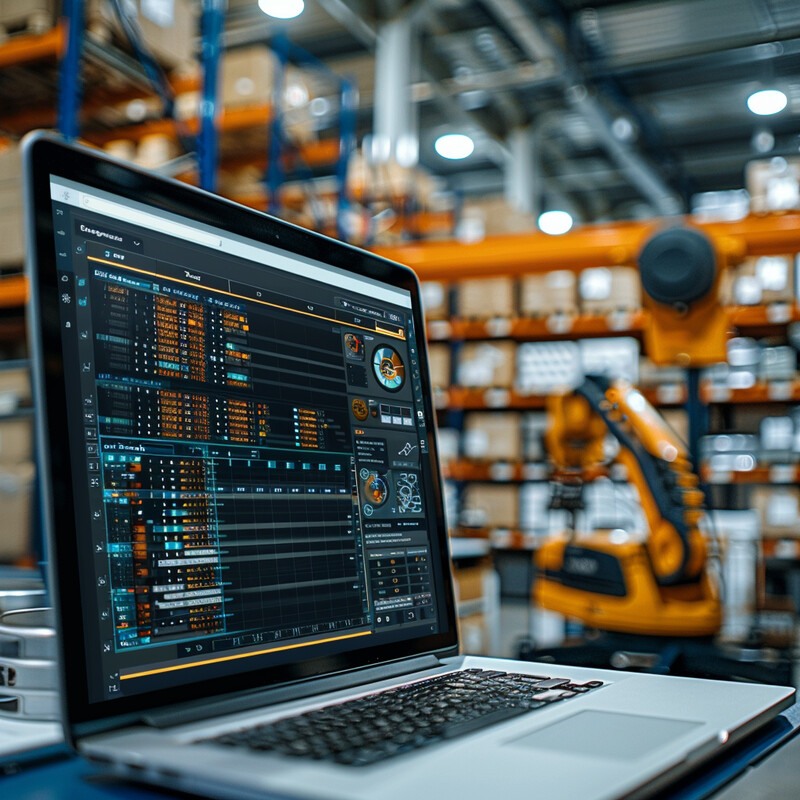
AWS says its Supply Planning module uses demand forecasts plus BOM, facility, and inventory data to recommend actions such as purchase orders and inventory transfer requests. RELEX's January 2026 K Group announcement similarly frames advanced replenishment, capacity and purchase optimization, and diagnostics as a unified automation layer across 1,100 stores, cash-and-carries, and distribution centers. Inference: replenishment is strongest when AI is tied directly to order and transfer decisions, not when it stops at a dashboard warning.
3. Warehouse Slotting and Space Utilization
Warehouse optimization is strongest when AI improves where inventory is stored, how it is moved, and how spare capacity is found before teams assume they need new space.

Amazon says Sequoia allows it to identify and store inventory up to 75 percent faster and reduce fulfillment-center order processing time by up to 25 percent by reimagining how inventory is stored and brought to employees. Blue Yonder says its latest warehouse capabilities add computer-vision yard tracking, robot performance visibility, and store-replenishment support from the warehouse. Inference: stronger warehouse optimization is no longer just about static layout studies. It is an execution problem that links storage, labor, and flow in real time.
4. Supplier Visibility and Lead-Time Risk
Inventory planning gets stronger when AI can see upstream delays earlier and translate supplier or transportation variability into stocking actions before service breaks.

AWS describes n-tier supplier visibility as a core part of AWS Supply Chain, alongside demand planning, supply planning, and inventory visibility. AWS also says Lead Time Insights helps planners identify vendor lead-time deviations by transportation mode and source location so they can update planning cycles before outdated assumptions create stockouts or excess safety stock. Inference: better inventory management increasingly depends on seeing supplier and transit variability as part of the inventory problem, not as someone else's data issue.
5. Robotics and Warehouse Execution
Robotics becomes most valuable when AI coordinates movement, pick-stow flow, and exception handling at fleet scale instead of treating robots as isolated automation islands.
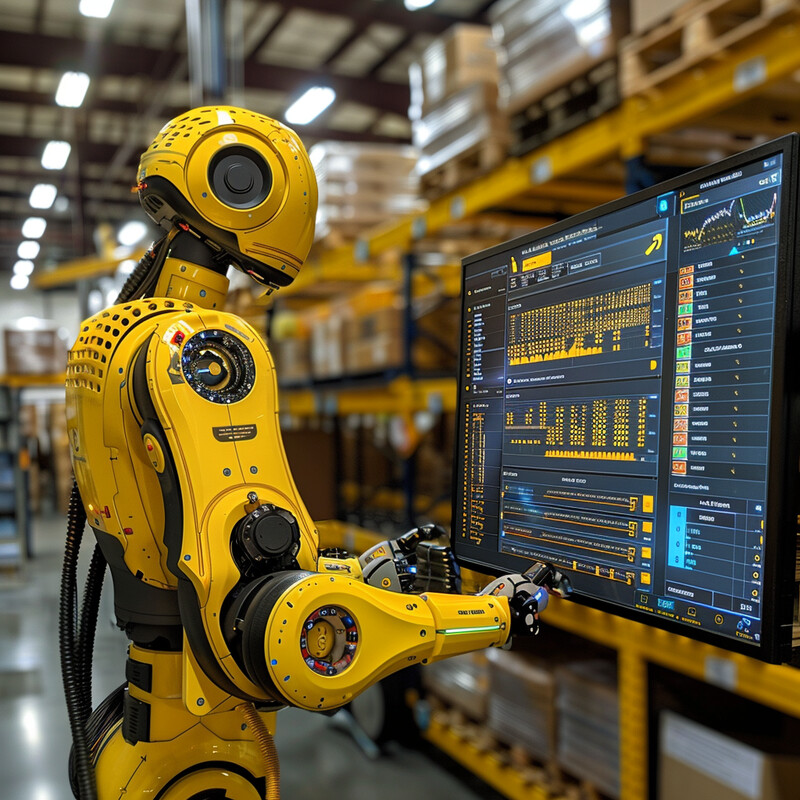
Amazon says it has now deployed its one millionth robot and that its DeepFleet foundation model improves robot travel efficiency by 10 percent by coordinating fleet movement across fulfillment centers. Blue Yonder's Warehouse Ops Agent is positioned around coordinating interdependent warehouse tasks and helping leaders act faster in dynamic environments. Inference: robotics in inventory management is shifting from point automation to AI-orchestrated execution.
6. Real-Time Inventory Accuracy and Cycle Counting
Real-time tracking is strongest when it supports trustworthy availability, faster corrections, and AI-guided cycle counting instead of just displaying stale stock files more quickly.

Microsoft says Inventory Visibility supports real-time on-hand queries, soft reservations, and available-to-promise calculations across channels and data sources. RELEX says True Inventory improves replenishment accuracy through perpetual inventory creation, anomaly detection, and automated balance corrections that address phantom inventory. Inference: strong inventory accuracy in 2026 means combining live visibility with AI-driven correction and targeted verification work, not relying on occasional full counts alone.
7. Markdown and Stock-Age Optimization
Markdown optimization is strongest when AI treats pricing as an inventory decision, especially for perishables and aging stock where margin, waste, and availability interact every day.

RELEX says its seasonal planning and markdown software uses price elasticity, the amount of stock to be cleared, accurate demand forecasts, and near-real-time inventory data to identify upcoming clearance and markdown needs. Blue Yonder's 2025 release similarly highlights capabilities that improve inventory fit for regional demand, prevent spoilage, and accelerate inventory turnover. Inference: inventory AI is strongest when it knows when to change the price because the stock itself has changed.
8. Shrink, Phantom Inventory, and Condition Inspection
Shrink and exception control get stronger when AI can detect suspicious or mismatched physical inventory conditions instead of treating every discrepancy as a generic stock variance.
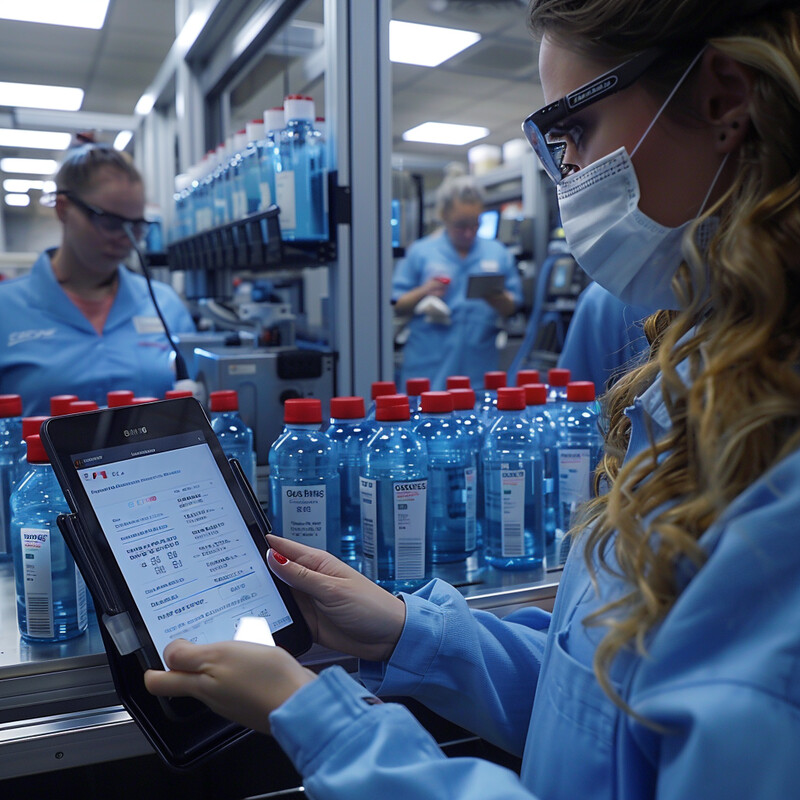
Happy Returns says its Return Vision pilot uses product photography and AI comparison against merchant catalog images to catch subtle return-fraud signals such as wrong logos, tags, or materials. In the same blog, the company says fewer than 1 percent of items are flagged for review, but those reviews average $218 in prevented loss. Paired with RELEX's emphasis on phantom inventory correction, the direction is clear: the strongest inventory systems now inspect both data anomalies and physical condition anomalies. Inference: shrink control is moving from retrospective reporting toward evidence-based exception screening.
9. Customer Availability and Order Promise
Customer service gets stronger when AI can answer a practical question fast: what is actually available, when can it ship, and how confident should we be in that promise?

Microsoft's inventory operations visibility workflows let planners and customer representatives query on-hand and available-to-promise inventory directly from product and order pages. Blue Yonder says its AI-based order management is behind Walgreens' 30-minute customer order promise. Inference: the strongest customer-service layer in inventory management is not a chatbot by itself. It is a promise engine backed by current inventory and fulfillment logic.
10. Returns and Reverse Logistics
Returns management is strongest when AI can decide what should be refunded, resold, graded, or removed quickly enough to recover value before the inventory ages out.

Blue Yonder says its latest release adds returns analytics, refund-decision logic, warehouse grading, and dynamic resale grading so goods can get back into saleable inventory faster and with less leakage. NRF and Happy Returns say total returns for the retail industry are projected to reach $890 billion in 2024, underscoring why reverse logistics has become an inventory management issue rather than a side process. Inference: strong inventory AI now extends all the way through disposition and recovery, not just forward replenishment.
Related AI Glossary
- Inventory Visibility explains the real-time stock picture that inventory systems need before they can make good decisions.
- Replenishment covers the restocking logic that turns inventory signals into action.
- Cycle Counting frames the continuous verification work that keeps physical inventory and system inventory aligned.
- Slotting Optimization explains how warehouse location choices affect travel, replenishment effort, and capacity.
- Supply Chain Control Tower covers the coordination layer that ties inventory, supplier, and logistics exceptions together.
- RFID anchors the item-level detection layer behind real-time counts and stock visibility.
- Time Series Forecasting helps explain the modeling layer beneath demand planning and short-horizon sensing.
Sources and 2026 References
- Microsoft Learn: Enhance your demand forecasting and planning.
- Microsoft Learn: Demand planning home page.
- AWS Executive Insights: AI-Powered Demand-Forecasting: Transforming Supply Chain Planning.
- AWS: Announcing AWS Supply Chain Supply Planning.
- RELEX Solutions: K Group to Transform Grocery Operations with RELEX.
- About Amazon: Amazon announces 2 new ways it's using robots to assist employees and deliver for customers.
- AWS: AWS Supply Chain Lead Time Insights enhances the support for data variability.
- AWS Documentation: What is AWS Supply Chain?.
- About Amazon: Amazon launches a new AI foundation model to power its robotic fleet and deploys its 1 millionth robot.
- Blue Yonder: Blue Yonder Transforms Supply Chain Management With New AI Agents and Supply Chain Knowledge Graph at ICON 2025.
- Microsoft Learn: Inventory Visibility Add-in overview.
- RELEX Solutions: RELEX Delivers Strong 1H 2025 Growth with AI Innovation and Customer Expansion.
- RELEX Solutions: Seasonal planning software.
- Happy Returns: A new line of defense: Piloting Return Vision AI fraud auditing software ahead of peak season.
- Microsoft Learn: Inventory operations visibility.
- NRF: NRF and Happy Returns 2024 Consumer Returns in the Retail Industry.
Related Yenra Articles
- Retail Stock Management brings the same inventory questions directly onto the sales floor and backroom.
- Supply Chain Management expands the story from item-level inventory into the broader supplier, logistics, and planning network.
- Warehouse Space Utilization Analysis dives deeper into slotting, storage density, and facility-level capacity decisions.
- Retail Price Optimization extends the markdown and margin side of the inventory story into broader pricing governance.
- Predictive Supply Chain Risk Modeling shows how upstream disruption signals can change stocking and replenishment plans before service breaks.